
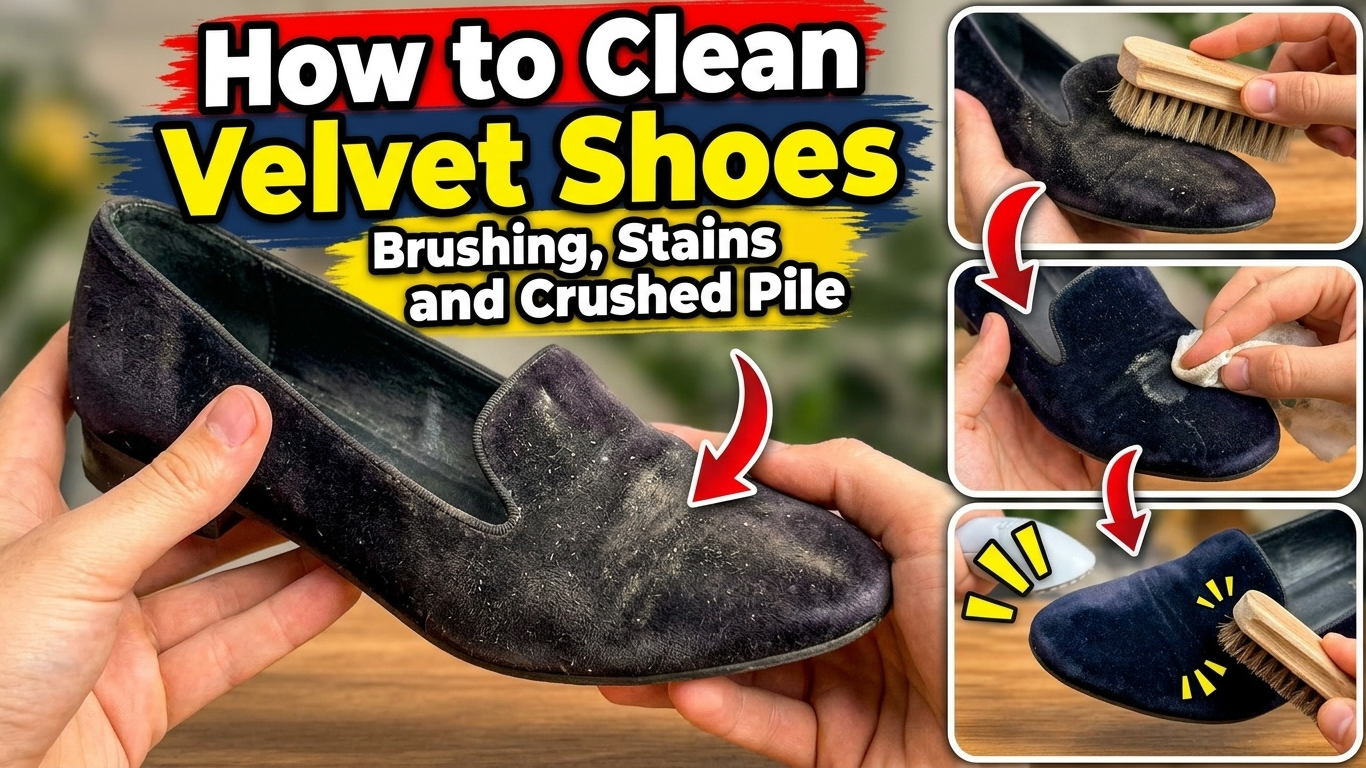
How to Clean Velvet Shoes: Brushing, Stains and Crushed Pile
To clean velvet shoes, let any mud dry, brush off the dirt with a soft brush using gentle strokes in one direction, then dab marks with a barely damp cloth or a small amount of mild soapy foam.
Never rub, never soak, and let the shoes air-dry naturally.
Velvet has a raised, soft surface (called the pile or nap) that flattens and marks easily, so the goal is always to lift dirt out without pressing the fibers down.
This guide covers how to brush velvet shoes, how to remove stains from velvet shoes, how to clean velvet heels (which have a few extra trouble spots), and how to restore crushed velvet shoes when the pile has been flattened.
Why Velvet Shoes Need Careful Handling
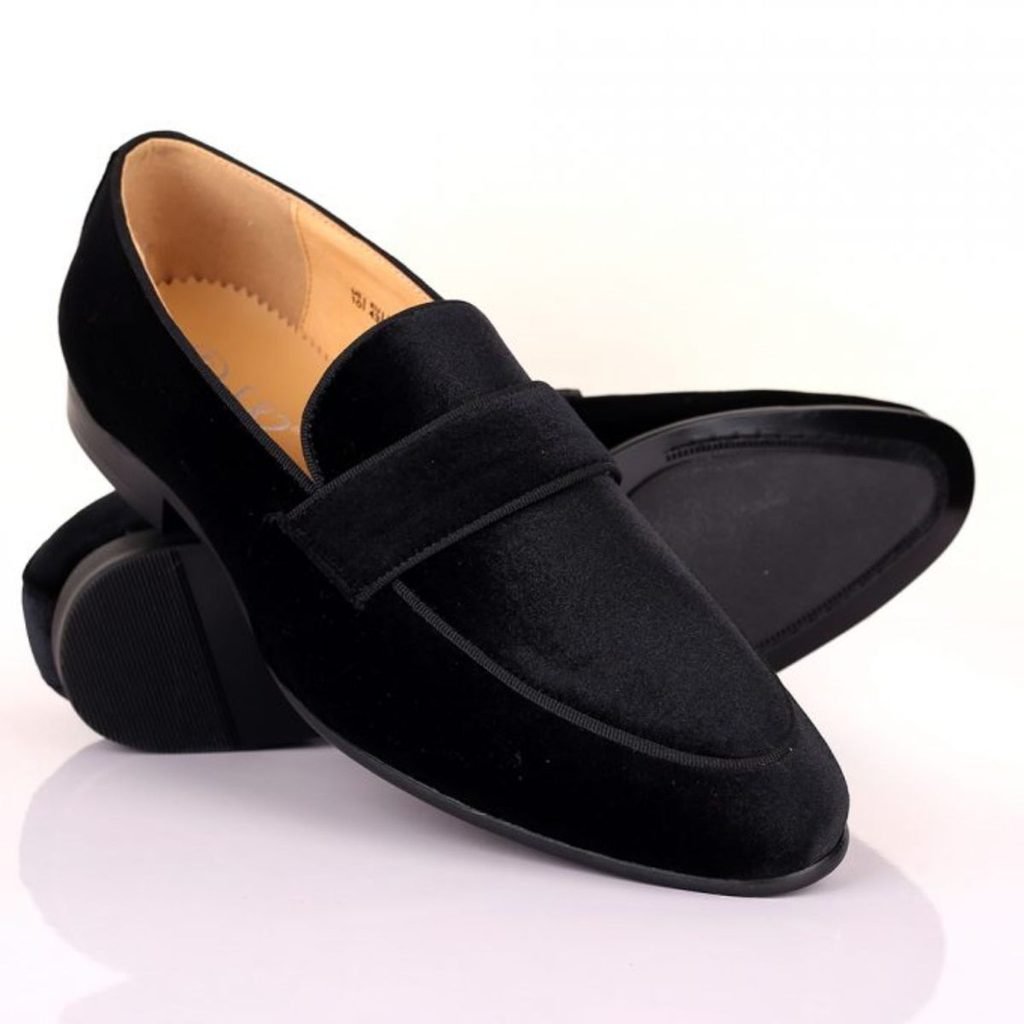
Velvet is a type of weave, not a single fiber. It can be made of silk, cotton, viscose or polyester, and the shoe’s care label (if it has one) or the brand’s website is the best place to check what yours is made of.
Many modern velvet shoes use synthetic velvet, which is generally more forgiving than silk velvet, but the same basic rules apply to all of them.
A few features of velvet explain most of its care rules:
- The pile traps dirt. Dust and grit sit between the fibers, so wiping with a flat, hard pressure rubs dirt in rather than lifting it out.
- The pile crushes. Pressure, rubbing and wetness can mat the fibers flat, and badly worn pile may not fully recover.
- It marks with water. Wetting velvet unevenly can leave rings or patches. Using as little moisture as possible limits this.
- Shoes add extra complications. Glued seams, stiffened toe boxes, foam insoles and fabric-covered heels do not tolerate soaking or heat.
If your shoes are very expensive, silk velvet, heavily embellished or labeled as dry-clean or professional-clean only, a specialist cobbler or cleaner is the safer choice for anything beyond light brushing.
What You Need
| Item | What it is for | Notes |
|---|---|---|
| Soft clothes brush, velvet brush or soft suede brush | Lifting dust and dirt, resetting the pile | Soft bristles only. |
| Clean soft toothbrush | Small stains, seams, around the heel | Use a clean, unused one. |
| White or light microfiber cloths | Blotting stains, drying | Avoid colored cloths that could transfer dye. |
| Mild dish soap | Making a gentle sudsy solution | A tiny drop in cool or lukewarm water. |
| Handheld garment steamer | Lifting crushed pile | Optional, but the best tool for flattened velvet. |
| Cornstarch or baking soda | Absorbing oily marks | Optional. |
| Clean white tissue paper or shoe trees | Holding shape while drying | White paper avoids dye transfer. |
| Protective spray | Helping future stains wipe off | Only a spray stated as safe for velvet or similar fabric. |
How to Brush Velvet Shoes
Brushing is the foundation of velvet care. Regular light brushing keeps dust from building up and helps prevent the pile from compacting.
- Make sure the shoes are completely dry. Brushing damp velvet can push dirt deeper.
- Remove laces or straps if possible so you can reach the sides and edges.
- Brush in one direction. Using a soft brush, work in long, light, straight strokes, following the direction of the nap. Avoid pressing hard or scrubbing in circles.
- Use the toothbrush for seams and edges. Go gently around the toe, vamp, heel counter and seams.
- Finish with a pass in the same direction to even out the pile.
For a quick routine, a light brush after each wear is a good habit. It removes surface dust before it can settle into the fibers.
Dried Mud and Dirt
If your velvet shoes are caked in mud, do not wipe it while wet. Let it dry completely, then flake off what you can and brush away the rest. Mud is much easier to remove from velvet once it is dry, and wiping wet mud can leave a stain behind.
Read also: How to Clean Knit Sneakers: Wash, Remove Stains and Dry Them Safely
How to Remove Stains From Velvet Shoes
Always test any cleaning method on a hidden area first, such as the inside edge of the tongue or the inner side of the heel. Wait until it dries to check for color change, water marks or stiffness.
The Basic Spot-Cleaning Method
- Blot first. If the stain is fresh, press a clean dry cloth onto it to absorb as much as possible. Do not rub.
- Mix a mild solution. Add a tiny drop of dish soap to cool or lukewarm water.
- Use only the foam. Dip a clean soft toothbrush or cloth in the solution, then take up only a little of the suds. The aim is to keep the shoe as dry as possible.
- Dab, do not scrub. Press the suds lightly on the stain using small dabs or very light strokes in the direction of the pile.
- Blot with a clean, barely damp cloth to remove soap residue, then with a dry cloth to absorb moisture.
- Let it air-dry, stuffed with white paper, then brush the pile gently to restore its texture.
Stain-Specific Tips
| Stain | What to try | What to avoid |
|---|---|---|
| Dry dirt or dust | Soft brushing | Wetting first |
| Mud | Let it dry, flake off, brush, then spot clean any leftover mark | Wiping while wet |
| Oil or grease | Blot gently, sprinkle cornstarch or baking soda, leave for a few hours, brush off, then spot clean if needed | Rubbing, or using water first on a large grease stain |
| Scuffs and shoe polish transfer | Gentle brushing, then a small amount of soapy foam | Hot water and rubbing, which can spread and push the mark deeper |
| Water marks | Lightly steam from a distance and brush the pile into place | Adding more water to “even it out” |
| Makeup, drinks, food | Blot immediately, spot clean with mild soapy foam | Waiting. Fresh stains are the easiest to remove |
| Stubborn or unknown stains | Stop and take to a professional cleaner | Harsh chemicals, bleach, nail polish remover |
Avoid Harsh Products
Strong solvents, bleach and stain removers can discolor velvet or damage the fibers and adhesives. If you want to try a specialist product, choose one that states it is suitable for velvet, delicate fabrics or suede-style textiles, and test it first.
How to Clean Velvet Heels
Velvet heels follow the same method as flat shoes, with a few extra things to watch.
- The heel itself. On many pairs the heel is wrapped in velvet. Treat it as you would the rest of the upper: brush, then dab. Do not soak it, as moisture can loosen the adhesive holding the covering in place.
- Heel tips and soles. Clean these separately from the velvet with a damp cloth, so dirt does not get transferred to the fabric.
- Embellishments. Crystals, beads, brooches and metallic trims are usually glued on. Avoid steam and wetness near them, and clean around them with a dry or barely damp cotton swab.
- Ankle straps and the heel counter. These areas rub against skin and trousers, so they pick up body oils and lint. Brush gently, then spot clean as needed.
- Insoles and linings. Wipe with a lightly dampened cloth, avoid soaking, and let the shoes air out. Baking soda sprinkled inside overnight and shaken out can help with odor.
- Storage. Heels can crush their toe pile when stacked, so store them upright or in individual cloth bags.
How to Restore Crushed Velvet Shoes
“Crushed” here means the pile has been pressed flat, for example from sitting on a shelf under another shoe, a heavy wet patch or a dent from rubbing. This is different from “crushed velvet” as a fabric style, which has a deliberately textured, patterned look that hides pressure marks.
If the fibers are only compressed, you can often lift them back up. If the pile has been worn away completely, it generally cannot be restored.
- Brush first. Gently brush the area in the direction of the nap to remove dust and begin lifting the fibers.
- Steam from a distance. Use a handheld steamer and keep the nozzle a few inches from the shoe. Move it slowly across the flattened area. Do not press it against the fabric and do not soak the velvet.
- Brush again while the pile is warm and relaxed, using light strokes with a soft brush.
- Blot any moisture with a clean, dry cloth, then let the shoes air-dry completely, stuffed with white paper.
Never use an iron directly on velvet. Contact with a hot, flat surface can permanently damage the pile. Keep steam away from glued embellishments and avoid steaming one spot repeatedly.
If steam and brushing do not lift the pile, or the area looks shiny and bald, the fibers are probably worn rather than flattened. A cobbler can sometimes help, but the original texture may not return.
Drying and Protecting Velvet Shoes
- Air-dry only. Keep the shoes at room temperature and away from heaters, hairdryers and direct sunlight.
- Never tumble dry.
- Stuff with white tissue or use shoe trees to hold the shape and absorb moisture.
- Consider a protective spray, but only one that is stated as safe for velvet, and test it first. It can make spots easier to remove, though it will not make shoes waterproof.
- Avoid rain, snow and wet pavements. Velvet shoes are best saved for dry conditions.
Common Mistakes
| Mistake | What can happen | Better approach |
|---|---|---|
| Rubbing stains | Spreads and pushes the stain in, mats the pile | Blot or dab |
| Soaking the shoe | Water marks, loosened glue, long drying | Use just the foam |
| Using hot water | Can set some stains and spread oily ones | Cool or lukewarm water |
| Ironing | Permanent flattening or shine | Steam from a distance |
| Brushing against the nap with force | Fuzzing and uneven texture | Gentle strokes in one direction |
| Using a stiff brush | Damages the pile | Soft brush only |
| Drying near heat | Warping, fading, stiffening | Room-temperature air |
| Skipping the patch test | Surprise discoloration | Test hidden area first |
Frequently Asked Questions
Can you wash velvet shoes in water?
Not by soaking them. Light spot cleaning with a small amount of mild soapy foam is the safest water-based method. Submerging or machine washing velvet shoes risks water marks, matted pile and damage to the glue and structure.
What is the best brush for velvet shoes?
A soft-bristled brush such as a clothes brush, velvet brush or suede brush, plus a clean soft toothbrush for seams. The brush should lift the pile gently rather than scrub it.
Can you use a steamer on velvet shoes?
Yes, in moderation, and from a few inches away. Steam can help lift flattened pile and refresh the fabric, but do not saturate the velvet or steam glued embellishments.
How do I remove water stains from velvet shoes?
Try light steaming from a distance and brushing the pile gently into place. Adding more water to blend the mark often makes it worse. If the mark persists, a professional cleaner is the safer option.
How often should I clean velvet shoes?
A quick brush after each wear helps. Deeper spot cleaning is best done only when a mark appears, because the less you wet velvet, the better it holds up.
Can I use a protective spray on velvet shoes?
A protector made for velvet or similar delicate fabrics can help repel stains and make cleaning easier, but check the label and test it on a hidden area first.
Final Recommendation
The safest routine for velvet shoes is gentle and dry-first: brush after wear, let mud dry before removing it, blot rather than rub, and use only a little mild soapy foam for stubborn marks.
A handheld steamer used from a distance is the best way to lift pile that has been flattened.
Skip hot water, irons, harsh chemicals and soaking; test everything on a hidden spot, and take expensive, silk or heavily embellished pairs to a specialist when a stain does not lift easily.
Read also:
One Comment