
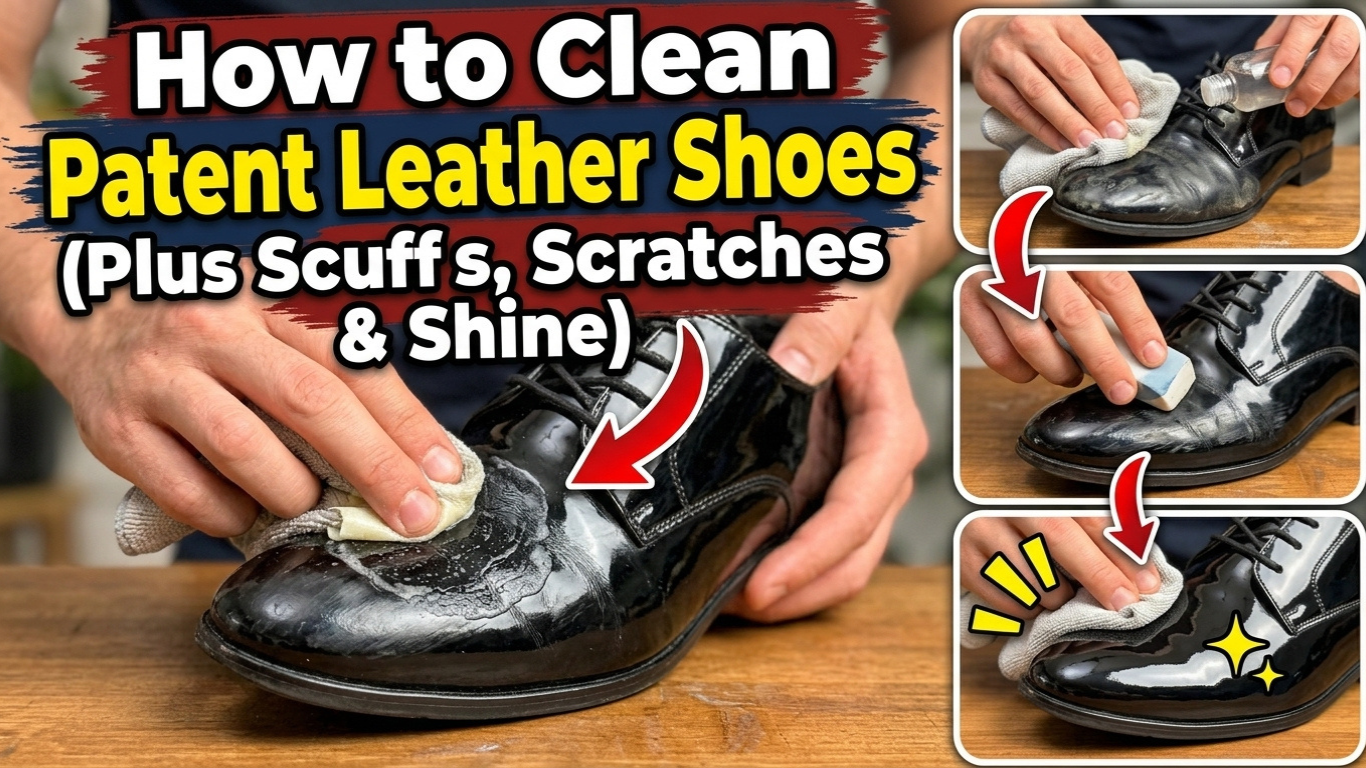
How to Clean Patent Leather Shoes (Plus Scuffs, Scratches and Shine)
To clean patent leather shoes, wipe them with a soft microfiber cloth dampened in lukewarm water and a tiny drop of mild soap, wipe again with a cloth wetted with plain water, then buff dry with a clean, dry cloth.
That is enough for most dirt and fingerprints. Scuffs, scratches and dullness need a slightly different approach, and a few common “hacks” can permanently damage the finish.
This guide covers the full routine: everyday cleaning, removing scuff marks from patent leather, polishing patent leather shoes, what you can and can’t do about scratches, and cleaning patent leather heels, including the parts people usually forget.
Why Patent Leather Needs Different Care
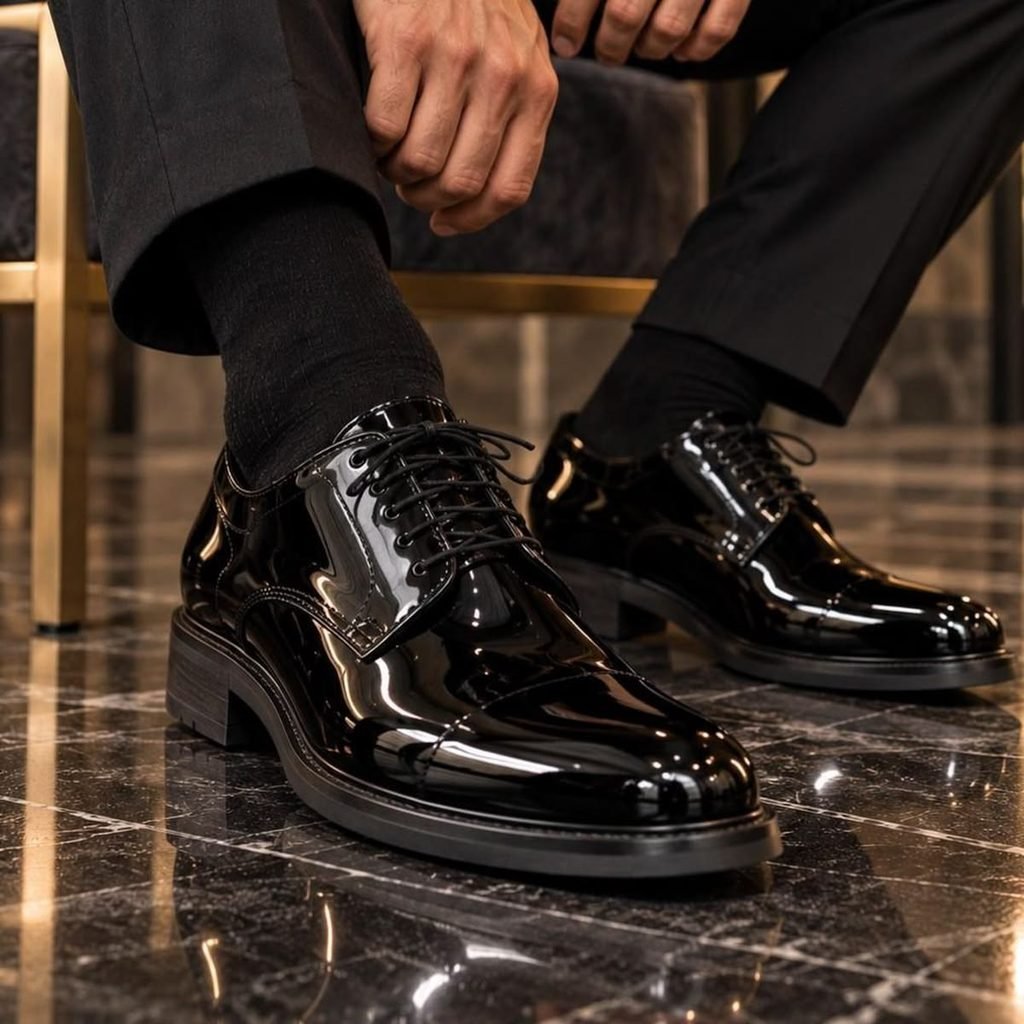
Patent leather is leather (or sometimes a synthetic base) with a hard, high-gloss coating on top. Traditionally, this was a lacquer-type finish; today it is commonly a polyurethane or plastic-type coating. Many shoes sold as “patent” are fully synthetic, and a lot of the care advice applies to both.
That coating explains almost everything about how to care for it:
- It is non-porous. Dirt sits on the surface instead of soaking in, so gentle wiping works well.
- It does not need much conditioning. Traditional leather creams and waxes are designed to feed porous leather. On patent, they mostly sit on top and look smeary.
- It scratches and scuffs easily, and it cannot be repaired like normal leather. Once the coating is cut through, you cannot buff or re-polish it back to new.
- It reacts badly to some solvents, heat and cold. Harsh chemicals can cloud or soften the coating, and extreme temperatures can make it sticky or crack.
If your shoes came with manufacturer care instructions, follow those first. They override general advice, especially for patent finishes on unusual colors or textured surfaces.
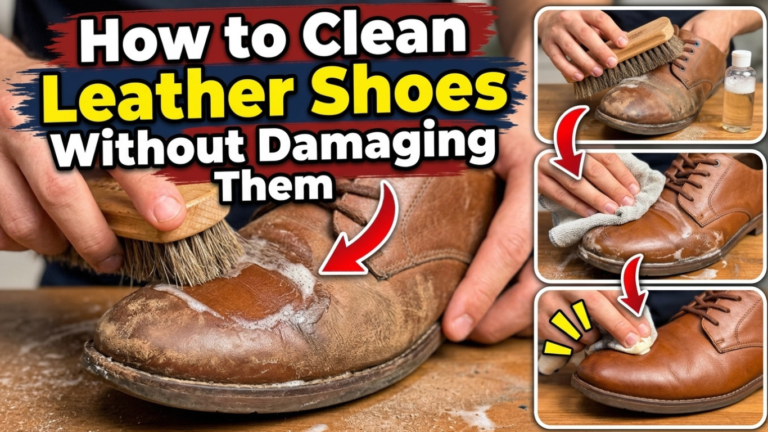
Read also: How to Clean Leather Shoes Without Damaging Them
What You Need
| Item | What it is for | Notes |
|---|---|---|
| Soft microfiber cloths (2-3) | Cleaning, rinsing, buffing | Use lint-free cloths. Avoid anything rough, which can micro-scratch the finish. |
| Lukewarm water | Loosening dirt | Not hot. Heat can affect the coating and glues. |
| Mild soap or gentle dish soap | Lifting grease and grime | One small drop is plenty. |
| Soft-bristled brush or old soft toothbrush | Seams, soles, heel edges | Keep bristles soft. |
| Petroleum jelly or baby oil | Light scuffs, shine | Use a tiny amount only. Test first. |
| Ammonia-free glass cleaner | Removing smears and restoring shine | Spray onto the cloth, not the shoe. |
| Dedicated patent leather cleaner | Cleaning and shine in one step | Check that it states it is suitable for patent. |
| Cotton swabs | Small marks and tight spots | Useful around hardware and trim. |
How to Clean Patent Leather Shoes: Step by Step
- Remove loose dirt. Wipe the shoes with a dry microfiber cloth. Brush grit off the soles, seams and heel edges with a soft brush. Rubbing dust or sand into the surface with a damp cloth is a fast way to scratch the finish.
- Take out the laces and insoles if they come out. This lets you clean the edges properly and dry the inside.
- Mix a very mild solution. Add one small drop of mild soap to a bowl of lukewarm water.
- Wipe the shoe. Dampen (do not soak) a microfiber cloth, wring it out well, and wipe the shoe in gentle sections. Use light pressure. For stubborn spots, hold the cloth against the mark for a few seconds before wiping.
- Clean the details. Use the soft brush or a cotton swab around stitching, buckles, straps and the edge where the upper meets the sole.
- Remove soap residue. Wipe again with a second cloth dampened in plain water. Soap left on the surface can leave a dull film.
- Dry right away. Buff the surface with a clean, dry microfiber cloth. Leaving water to air-dry on patent can leave spots.
- Let the shoes air-dry fully. Keep them at room temperature, away from radiators, hair dryers and direct sun. Stuff the toe area loosely with acid-free paper or a cloth if the shoes are damp inside, and keep the shoes from touching each other.
Test First
Before using any cleaner, oil or household product beyond soap and water, test it on a hidden area such as the inside of the tongue, the back of the heel or the inner edge near the sole. Wait until it is fully dry and check for clouding, stickiness, color transfer or softening before using it on the visible surface.
How to Remove Scuff Marks From Patent Leather
Not every dark or white mark on patent is a scuff in the coating. Many are transfer marks: rubber, paint or another material left on top of the finish. Those can usually be removed. A true scuff or scratch that has cut or abraded the coating is different (see the next section).
Try these methods in order, from gentlest to strongest:
- Plain rubbing with a clean microfiber cloth. Use small circular motions and light pressure. Friction alone often lifts surface transfer from rubber soles or other shoes.
- Soapy-water wipe. Use the cleaning method above, concentrating on the mark.
- A little petroleum jelly or baby oil. Put a very small amount on a soft cloth and rub the scuff gently in circles. Wipe away the excess with a clean cloth, then buff. The oil can help lift marks and reduces the look of light surface abrasions.
- Ammonia-free glass cleaner. Spray it on a cloth, wipe the area, and buff dry. This can remove light smears and leave a clear shine.
Methods to Avoid or Use With Great Caution
| Method | The risk |
|---|---|
| Melamine “magic” erasers | They work as a very fine abrasive and can dull or wear through the coating. Use only as a last resort on a hidden spot, and expect a risk of matte patches. |
| Nail polish remover (acetone) | Strong solvent that can dissolve or cloud the finish. Avoid. |
| Rubbing alcohol | Can dull or damage some coatings. If you try it, test first and use only a lightly dampened swab. |
| Abrasive sponges, scouring pads | They scratch the finish. Avoid. |
| Hot water or hairdryers | Heat can soften the coating, weaken glues and cause warping. |
| Standard shoe polish and wax | Will not absorb, tends to smear and can cover the shine rather than improve it. |
Light-colored patent such as white, cream or pastel shows scuffs most, and can also take on dye transfer from dark jeans, bags or newspaper ink. Deep dye or ink stains are hard to remove safely at home. If a gentle wipe does not shift it, a professional cobbler is a safer option than stronger chemicals.
Can You Remove Scratches From Patent Leather?
The honest answer: light surface scratches can often be made far less visible, but deep scratches cannot be truly removed at home.
The difference comes down to the coating:
- Surface marks and fine scratches. The finish is only scuffed or marked. Cleaning, a thin layer of petroleum jelly or baby oil, and buffing can reduce their appearance because the oil fills the micro-abrasion and restores gloss.
- Deep scratches or scrapes where the color layer or underlying leather shows. The coating has been cut through. A cobbler may be able to touch up the area with a color-matched patent finish, but it is a cosmetic repair, not a restoration.
- Cracks and peeling. These indicate the coating is breaking down, often because of age, cold or flexing. They cannot be fixed by polishing, and applying product over them will not stop it spreading.
Steps for Light Scratches
- Clean and dry the shoe first, so you do not rub grit into the area.
- Put a very small amount of petroleum jelly or baby oil on a soft cloth.
- Rub gently over the scratch in small circles for about 30 seconds.
- Wipe off all excess with a clean cloth.
- Buff with a dry microfiber cloth and check in good light.
If the scratch remains clearly visible after a couple of attempts, stop. More rubbing will not fix it and can leave a smeared patch.
How to Polish Patent Leather Shoes
Patent leather is already glossy, so “polishing” really means removing dullness and smears and bringing back the shine, not applying wax or cream.
Option 1: Wipe and buff. After cleaning, a dry microfiber cloth alone often restores most of the shine.
Option 2: Ammonia-free glass cleaner. Spray a small amount onto a cloth (never directly on the shoe), wipe the surface and buff immediately.
Option 3: A thin layer of petroleum jelly. Rub a pea-sized amount into the cloth, wipe it over the shoe in a very thin layer, then buff off the excess thoroughly. Too much leaves a greasy film that collects dust and can transfer onto clothing.
Option 4: A product made for patent leather. Choose a cleaner or shine product that explicitly states it is safe for patent leather, and follow its instructions.
Do not use waxy polishes, heavy creams or silicone-heavy sprays unless the label confirms they are suitable. They can leave residue, make the surface sticky or dull the gloss.
How to Clean Patent Leather Heels
Heels follow the same basic method as flat shoes, but they have extra problem areas.
- The heel itself. Patent heels pick up scuffs from car floors and pedals, doorframes and walking. Wipe with a lightly dampened cloth and treat any scuffs as above.
- The heel tip. If it is worn down or the metal is exposed, a cobbler can replace the tip. Walking on a worn tip can damage the heel itself.
- Straps and buckles. Use a cotton swab around metal parts. Wipe metal dry to avoid water spots or tarnish.
- Sole and edges. Use the soft brush with soapy water on the sole edge, then wipe clean. Avoid letting the sole edge stay wet.
- Insoles and lining. For the inside, wipe the insole with a cloth lightly dampened with soapy water, then wipe with plain water and let it dry fully in open air. Sprinkling baking soda inside overnight and shaking it out can help with odor.
- Stiffening or sticking. Patent heels that have been stored in heat can stick to other shoes. Do not pull them apart forcefully. Let them cool and separate them slowly.
Avoid soaking heels. Water that gets into the heel’s glued joints or insole can weaken the construction.
Common Mistakes When Cleaning Patent Leather
| Mistake | Consequence | Better approach |
|---|---|---|
| Soaking the shoes | Water spots, weakened glue, damp lining | Use a barely damp cloth |
| Using paper towels or rough cloths | Fine scratches and dull patches | Use microfiber |
| Applying regular shoe polish | Smearing, dull, sticky finish | Use only products made for patent |
| Using acetone or strong solvents | Clouding, softened or removed finish | Stick to soap, water and gentle options |
| Drying near a heater | Warping, stickiness, cracking | Dry at room temperature |
| Applying too much oil or petroleum jelly | Greasy film, dust, transfer onto clothing | Use a pea-sized amount and buff well |
| Not testing first | Unnoticed damage to visible areas | Test on a hidden spot |
How to Keep Patent Leather Looking Good
- Wipe after wearing. A quick pass with a dry or barely damp cloth stops dirt from building up.
- Store shoes separately. Patent leather can stick to other shoes, and dye can transfer between them. Use individual cloth bags or wrap each shoe in soft cloth.
- Avoid airtight plastic bags. They trap moisture and can encourage sticking.
- Keep them away from heat and strong sunlight. Don’t leave patent shoes in a hot car.
- Be careful in the cold. Very cold temperatures can make the coating stiff and more likely to crack when you flex it. Let them come to room temperature before wearing.
- Keep away from dark fabrics and ink. Dye transfer from jeans, leather bags and newsprint is a common cause of stains on pale patent.
Frequently Asked Questions
Can you use water to clean patent leather shoes?
Yes. Patent leather is non-porous, so a cloth dampened with lukewarm water, with a drop of mild soap if needed, is the standard method. Keep the cloth just damp and dry the shoe promptly. Avoid soaking or submerging the shoes.
What is the best household product for patent leather scuffs?
Start with plain rubbing and mild soapy water. If a scuff remains, a very small amount of petroleum jelly or baby oil on a soft cloth is a commonly used gentle option. Avoid acetone, abrasive sponges and standard shoe polish.
Does patent leather need conditioner?
Generally not in the way regular leather does. The coating is not porous, so traditional conditioners do not soak in. If you want to protect or shine it, use a product made for patent, or just buff after cleaning.
Can cracked patent leather be repaired?
Not reliably at home. Cracking means the coating has broken down, and polishing or oiling will not rebuild it. A cobbler may be able to improve the appearance of minor damage, but the surface cannot be returned to like-new condition.
Can I use a hairdryer to dry patent leather shoes?
It is best not to. Concentrated heat can soften the coating, cause warping and damage adhesives. Let patent shoes dry naturally at room temperature.
How do I stop patent leather shoes from sticking together?
Store each shoe or pair separately in a soft cloth bag or wrapped in cloth, keep them out of hot places and avoid pressing them against each other.
Final Recommendation
For nearly all patent leather shoes, the safest routine is simple: remove grit with a soft cloth, wipe with a barely damp microfiber cloth and a tiny drop of mild soap, rinse with a plain damp cloth, then buff dry.
Treat light scuffs and fine scratches with a minimal amount of petroleum jelly or baby oil, and always test any product first.
If the finish is cut through, cracked or stained with dye, accept that home methods have limits and take the shoes to a cobbler rather than escalating to stronger products. Store them separately, away from heat, and wipe them after wearing to keep them glossy for longer.
Read also:
2 Comments