How to Clean Suede Shoes: A Practical Guide for Dirt, Stains and Scuffs
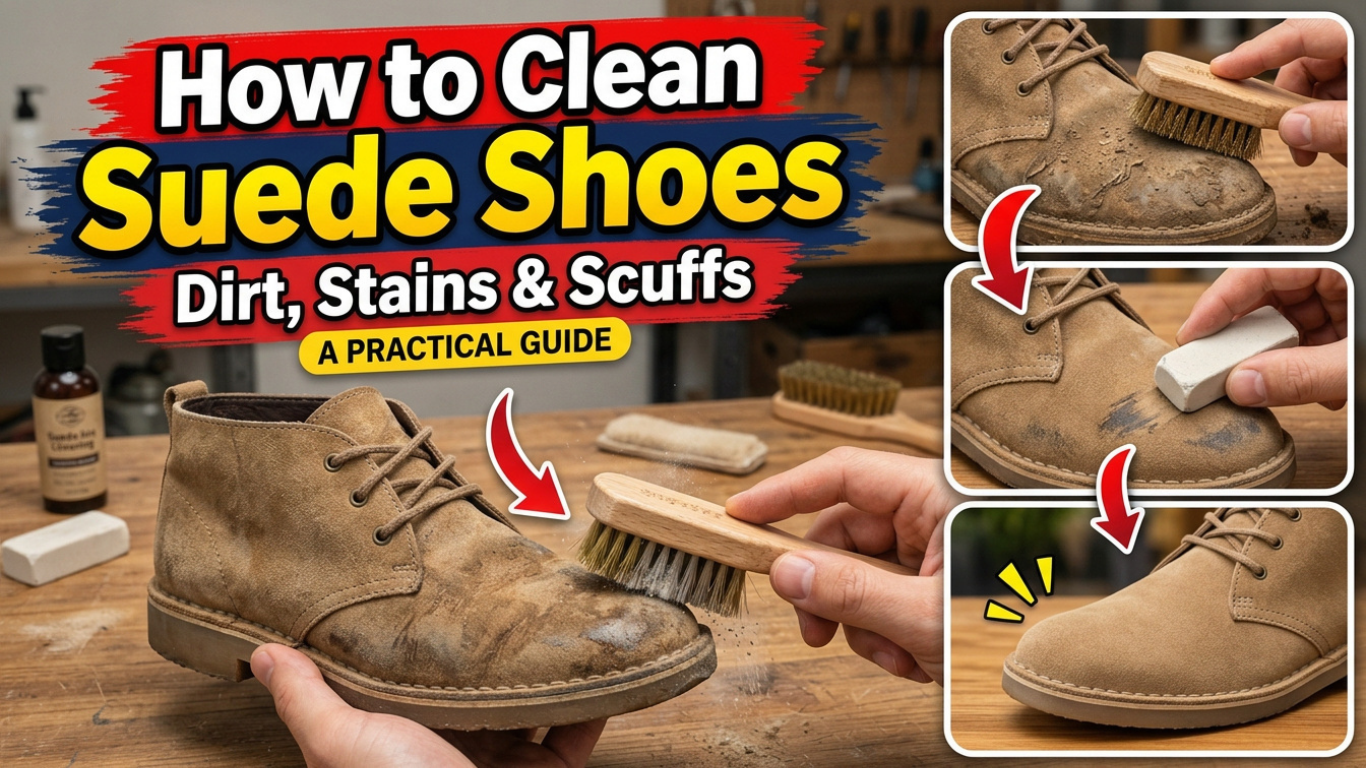
To clean suede shoes, let them dry completely, brush off loose dirt with a suede brush, rub scuffs and marks with a suede eraser, and treat stains with a small amount of white vinegar on a clean white cloth.
Let the suede dry naturally, then brush the nap back up.
Suede is leather with a soft, napped surface, so it reacts badly to soaking, heat and oily products. The aim is always to use as little moisture as possible.
This guide covers how to clean suede shoes at home, what to do when you have no suede cleaner, how to deal with specific stains, and how to remove dirt without flattening or discolouring the nap.
What Makes Suede Different
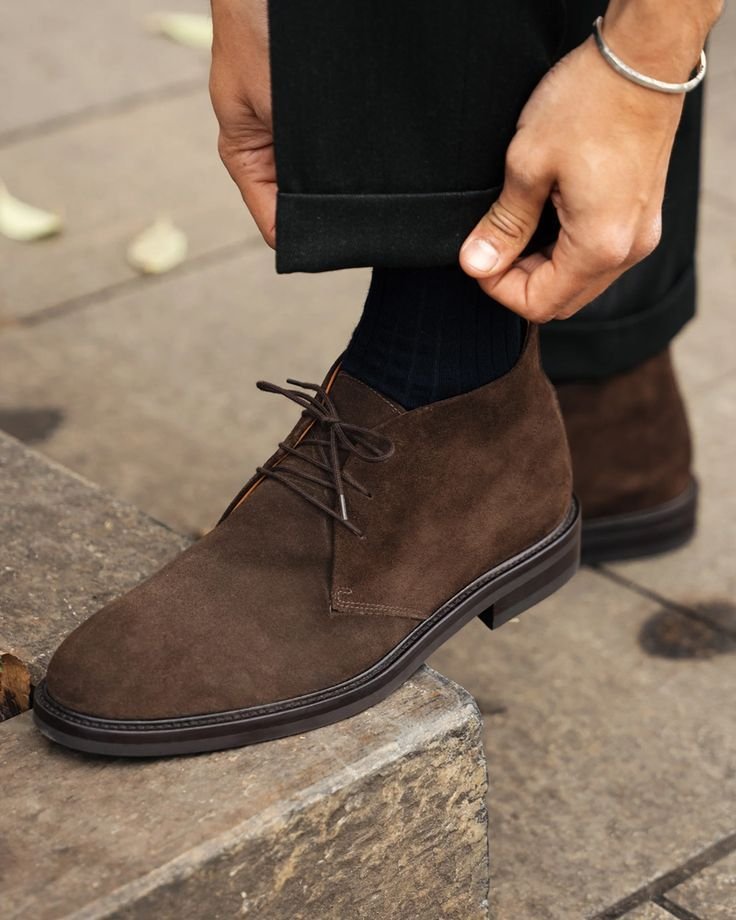
Suede is made from the underside of animal hide, which is buffed to create a velvety surface of tiny fibres called the nap.
That nap is what traps dirt, absorbs water and shows every scuff. It is also why suede can’t be scrubbed like smooth leather: hard rubbing flattens or wears away the fibres, leaving shiny, bald patches.
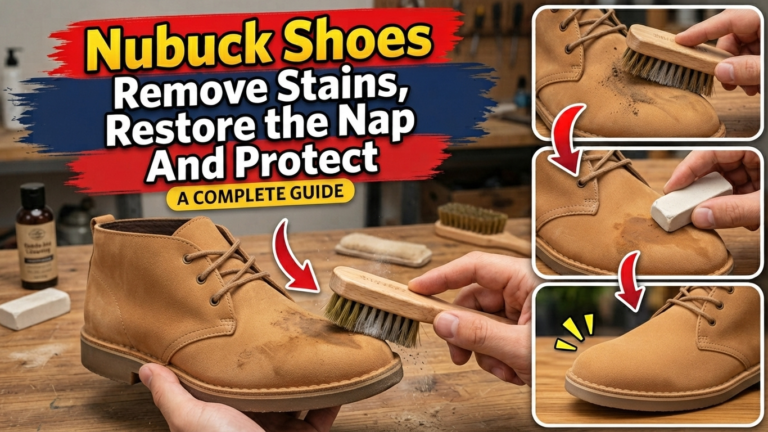
Nubuck looks similar but is made from the outer side of the hide, sanded to a fine nap. It is generally a little tougher, and the methods below usually work on it too.
Check the manufacturer’s care label first, though.
Synthetic “faux suede” and microsuede are more tolerant of water and can often be cleaned with mild soap, so don’t assume the same limits apply.
What You Need
| Item | What it does | Notes |
|---|---|---|
| Suede brush (brass, nylon or crepe-rubber bristles) | Lifts dirt and restores the nap | A soft-bristled brush is the safer choice for delicate or light-coloured pairs |
| Suede eraser | Lifts dry marks and shiny patches | A clean white pencil eraser can work, but avoid coloured erasers, which can transfer dye |
| White cloths or paper towels | Blotting and applying cleaners | Use white only, since dyed cloths can bleed onto suede |
| White vinegar | Treats water marks, salt marks and light stains | Test first; use sparingly |
| Cornstarch or talcum powder | Absorbs fresh grease | Needs time to work |
| Clean toothbrush | Reaches seams and welts | Soft bristles only |
| Suede protector spray | Repels water and stains afterwards | Apply to clean, fully dry shoes |
| Shoe trees or paper | Holds shape while drying | Use plain, uncoloured paper |
Before You Start: Test and Prepare
- Test somewhere hidden. Dab a tiny amount of any liquid on an inside area such as under the tongue. Let it dry fully and check for colour change or stiffness. Dyes on suede vary a lot, and bright or dark shades can bleed.
- Let the shoes be dry. Never brush or rub damp suede. Mud in particular should dry completely first, since wet mud smears into the nap.
- Remove the laces and stuff the shoes with shoe trees or plain paper so the upper holds its shape.
- Work in good light so you can see how the nap responds.
How to Clean Suede Shoes at Home, Step by Step
This routine suits everyday dirt and light marks, and it is the best starting point before trying anything stronger.
- Brush off loose dirt. Using gentle, short strokes in one direction, brush the whole shoe to lift dust and dried mud. Don’t press hard.
- Rub out scuffs and shiny spots. Use the suede eraser with light back-and-forth strokes on the mark. Brush away the crumbs as you go.
- Clean seams and edges. A soft toothbrush loosens dirt trapped along stitching and where the upper meets the sole.
- Treat remaining stains using the methods in the next sections.
- Restore the nap. Once dry, brush the suede again, ideally in one direction, to lift the fibres and even out the colour.
- Protect the surface. Apply a suede protector spray in light, even coats from the distance on the can, and allow it to dry fully.
How to Clean Dirt Off Suede Shoes
Dry dirt is the easiest problem to fix, and the usual mistake is reaching for water too soon.
- Dust and light dirt: Brush, then use the eraser on any marks that remain.
- Dried mud: Leave it until fully dry, then flex the shoe slightly so it crumbles. Brush it off, then work over the area with the eraser.
- Ground-in dirt in the nap: Brush in several directions to loosen it, then back in one direction. If it stays put, use the vinegar method below, but only on the affected area.
- Dirty soles and midsoles: Rubber and synthetic soles can be cleaned with a damp cloth and a little mild soap. Keep it well away from the suede, or shield the upper with masking tape.
How to Clean Suede Shoes Without Suede Cleaner
You don’t need a dedicated suede cleaner for most jobs. These household options are widely used, and each has limits.
| Method | Best for | How to use | Limits |
|---|---|---|---|
| Dry brushing | Dust, dry dirt | Brush gently in one direction | Won’t lift set-in stains |
| White pencil eraser | Scuffs, shiny patches, light marks | Rub lightly, brush off residue | Coloured erasers can leave dye; too much pressure damages the nap |
| White vinegar | Water marks, salt marks, light stains | Dab with a barely damp white cloth, let dry, brush | Test first; may lighten some dyes |
| Cornstarch or talcum powder | Fresh grease or oil | Cover, leave for several hours, brush off | Won’t remove old, set oil stains |
| Steam from a kettle (held at a distance) | Lifting a flattened nap | Hold briefly a safe distance away, then brush | Too much moisture or heat can warp or stain suede |
If you have nothing else, a clean white towel and a stiff brush used dry will handle the majority of everyday dirt. A clean, dry nail brush or a new, soft toothbrush also works for tight spots.
How to Clean Stained Suede Shoes
The right approach depends on what caused the stain and how long it has been there. Always act quickly and blot, never rub.
Water marks and spots
Ironically, water leaves marks on suede because it dries unevenly. To fix a mark, lightly dampen the whole panel evenly with a barely moist white cloth, working from seam to seam so there are no edges. Stuff the shoe with paper and let it dry naturally, then brush the nap up. Even dampening is the key, since a patch of damp leaves a new ring.
Oil and grease stains
- Blot excess oil gently with a clean cloth. Don’t rub it in.
- Cover the stain thickly with cornstarch or talcum powder.
- Leave for several hours or overnight so the powder can absorb the oil.
- Brush the powder off and repeat if the mark is still visible.
Old grease stains that have set often won’t fully lift at home. A professional suede cleaner is a better option than trying harsher products.
Salt and winter marks
Mix white vinegar and water in roughly equal parts, dampen a white cloth lightly, and dab the stained area. Don’t soak. Let it dry, then brush. Repeat once if needed, rather than applying more liquid.
Ink and dye stains
These are hard to remove, and home attempts often make them worse. Dabbing a tiny amount of rubbing alcohol on a cotton swab is sometimes suggested for ink, but it can strip colour and leave a pale patch. Test it hidden first, or take the shoes to a specialist.
Food and drink spills
Blot up the liquid immediately and let the area dry. Once dry, brush and erase any residue. For sugary or sticky spills, a lightly dampened cloth followed by even drying is usually enough.
Blood and other organic stains
Blot gently and let it dry. A very lightly dampened cloth with a little vinegar solution may help, but test first.
Drying Suede Shoes Properly
Drying is where many careful cleaning jobs go wrong.
- Dry at room temperature, away from radiators, hairdryers and direct sunlight. Heat can shrink and stiffen suede and cause cracking.
- Stuff the shoes with plain white paper or use shoe trees to hold their shape. Replace the paper if it becomes damp.
- Allow a full day, or longer if the shoes got wet.
- Once dry, brush the nap to restore its texture.
Mistakes to Avoid
| Mistake | What can happen |
|---|---|
| Soaking the shoes or using the washing machine | Stiffness, stains, shrinking and warping |
| Scrubbing hard with a stiff brush | Flattened nap and bald patches |
| Using heat to speed drying | Cracking and shrinkage |
| Using oils, polishes or shoe creams made for smooth leather | Dark, greasy patches that are hard to reverse |
| Using coloured cloths or erasers | Dye transfer onto the suede |
| Applying strong chemicals without testing | Colour loss and uneven patches |
| Brushing wet mud | Pushing dirt deeper into the nap |
When to Take Suede Shoes to a Professional
Home cleaning has limits. Consider a cobbler or specialist suede cleaner if the shoes have old, set-in oil or ink stains, widespread water damage, mould, strong odours, or dye loss, or if they are an expensive pair you can’t afford to risk.
How to Keep Suede Clean for Longer
- Waterproof early. Apply a suede protector spray to new shoes and reapply as the manufacturer recommends, especially before the wet season.
- Brush regularly. A quick brush after wearing prevents dirt working into the nap.
- Rotate pairs. Giving suede a day to rest helps it dry out and keep its shape.
- Store carefully. Keep shoes in a cool, dry, ventilated place with shoe trees, and avoid sealed plastic bags, which trap moisture.
- Avoid wearing suede in heavy rain or mud when you can.
Frequently Asked Questions
Can you wash suede shoes with water?
Generally no. Soaking can stiffen suede, stain it and change its shape. A very lightly dampened cloth for spot treatment is fine, but fully washing them or using a washing machine is risky. Check the care label, since some treated or synthetic suedes are more water-tolerant.
Can I use vinegar on suede?
Yes, white vinegar is a common home remedy for water marks, salt stains and light marks. Dilute it, apply it sparingly with a white cloth, and test it somewhere hidden first. It can lighten some dyes.
How do I get a stain out of suede if it has already dried?
Brush the area first, then try the eraser. If the mark remains, use a barely damp white cloth with diluted white vinegar, dab rather than rub, and let it dry evenly before brushing. Oil and ink that have fully set may need professional treatment.
How do I fix flattened or shiny suede?
Brush the nap with a suede brush. A suede eraser can lift shiny patches, and holding the shoe briefly over steam at a safe distance followed by brushing can help raise the fibres. Don’t let the suede get wet.
Can I clean suede shoes with baby wipes or soap?
It’s best not to. Many wipes and soaps contain oils, moisturisers or dyes that can leave marks and change the texture of the nap. Plain white cloths with the methods above are safer.
How often should I clean my suede shoes?
Brush them after wear and deal with stains as soon as they happen. A deeper clean once the shoes look dull or dirty, and a reapplication of protector spray as directed on the product, is generally enough.
Conclusion
The safest way to clean suede shoes is to start dry: brush, then erase, and only then add a little moisture for stubborn marks.
Test any liquid first, blot instead of rubbing, dry slowly at room temperature, and brush the nap back up when finished.
For most everyday dirt, a suede brush, an eraser and a white cloth are all you need, and a protector spray will make the next clean easier.
If a stain won’t budge after a gentle attempt or two, stop and take the shoes to a specialist before trying anything harsher.
2 Comments