
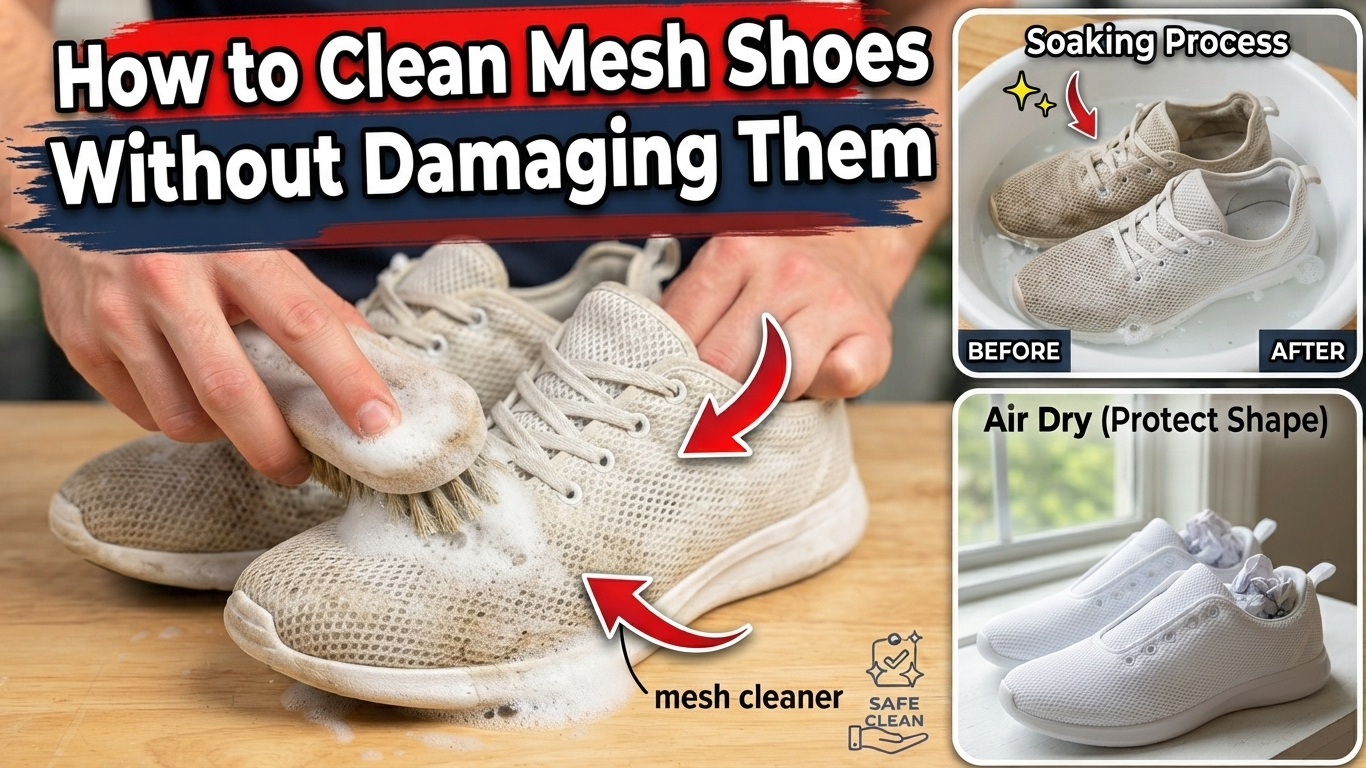
How to Clean Mesh Shoes Without Damaging Them
To clean mesh shoes, brush off loose dirt, take out the laces and insoles, scrub the mesh gently with a soft brush and a mild soap-and-lukewarm-water solution, wipe away the suds with a clean damp cloth, then let the shoes air-dry at room temperature.
Skip the washing machine and the tumble dryer. Heat and tumbling are the two things most likely to ruin the glue, foam and shape of a mesh sneaker.
This guide covers how to wash mesh sneakers by hand, how to remove dirt from mesh shoes (including dried mud and stubborn grime), how to clean running shoe mesh, and how to avoid the mistakes that cause fraying, warping and yellowing.
Why Mesh Is Easy to Dirty and Easy to Damage
Mesh uppers are an open weave, usually of polyester or nylon. The tiny gaps that make a shoe breathable also let dust, mud and sweat work into the fabric instead of sitting on top. That is why a mesh sneaker can look grubby long before the rest of the shoe is worn out.
The same construction is also why it needs a lighter touch than canvas or leather:
- The weave is thin. Hard scrubbing with a stiff brush can fuzz, snag or fray it.
- It is bonded to other parts. Mesh is typically glued or stitched to overlays, toe caps and a foam midsole. Soaking or heat can weaken those bonds.
- The foam underneath is sensitive. Some midsole foams react badly to water and high temperatures, which is one reason brands and shoe retailers generally recommend spot cleaning and hand washing over machine washing.
Not all “mesh” is the same. Open-weave mesh on a running shoe, tighter engineered mesh and knit uppers (such as Nike Flyknit) can all look similar. Knit is the most delicate: a soft cloth is usually a better choice than a brush, even if it takes a little more effort to lift a stain.
What You Need
| Item | What it is for | Notes |
|---|---|---|
| Soft-bristled shoe brush or clean toothbrush | Loosening dirt from the weave and seams | Bristles should be soft. Avoid wire or stiff nylon brushes. |
| Mild laundry detergent, dish soap or sneaker cleaner | Lifting dirt and sweat | A small amount goes a long way. |
| Lukewarm water | Making the cleaning solution | Avoid hot water. |
| Microfiber cloths (2) | Wiping, rinsing, blotting | One for soapy wiping, one for rinsing and drying. |
| Baking soda (optional) | Paste for white or light mesh, odor control inside the shoe | Better suited to white or light shoes than bright colors. |
| Paper towels or white cloth | Stuffing the shoe while it dries | Use white or plain paper so ink or dye cannot transfer. |
| Mesh laundry bag (optional) | Washing laces | Laces only, not the shoes. |
How to Clean Mesh Shoes by Hand: Step by Step
- Dry-brush first. Knock the soles together outside, then brush loose dirt and dust off the mesh and midsole with a dry soft brush. Wetting dirt before removing it turns dust into mud and pushes it deeper into the weave.
- Remove the laces and insoles. This opens up the tongue and the sides of the shoe and lets you clean and dry each part properly.
- Mix your solution. Add a small amount of mild detergent or dish soap to a bowl of lukewarm water.
- Scrub gently. Dip the brush, shake off the excess and work over the mesh in small circles with light pressure. Keep the brush damp, not dripping. For knit uppers, use a soft cloth instead.
- Clean the details. Use the toothbrush on seams, around the toe cap, the eyelets and where the upper meets the midsole.
- Wipe away the soap. Go over the shoe with a clean cloth dampened in plain water. Repeat if suds remain, and repeat the whole wash a couple of times for very dirty pairs.
- Blot, do not wring or rub. Press a dry microfiber cloth against the mesh to lift out as much moisture as you can.
- Stuff and dry. Loosely fill the shoe with white paper towels or plain cloth to help it hold its shape and soak up moisture. Swap the paper once it is damp.
- Air-dry at room temperature. Keep the shoes away from radiators, hairdryers, direct sun and tumble dryers. Running shoes can take up to around eight hours to dry fully, so plan to clean them the evening before you need them rather than the morning of.
- Re-lace once everything is fully dry.
Watch It Done
If you prefer to see the technique before trying it, this video demonstrates how to clean and restore mesh sneakers:
Watch on YouTube: Dirty Mesh Sneakers? This is the PROPER Way to Do It
Different people use different products, so treat the video as a demonstration of technique and apply the same caution here: soft tools, minimal water and no heat.
How to Remove Dirt From Mesh Shoes
The right method depends on what you are removing.
| Problem | What to do | What to avoid |
|---|---|---|
| Dry dust and loose dirt | Dry brush, then a damp cloth wipe | Wetting first, which smears dirt in |
| Dried mud | Let it dry fully, flake and brush off as much as possible, then use the soapy brush method | Scrubbing wet mud into the weave |
| General grime and sweat | Soap-and-water brush wash | Soaking the whole shoe |
| Grease or oil | Blot, then work in a tiny dab of dish soap with a soft brush and rinse with a damp cloth | Rubbing hard or using solvents |
| Grass or colored stains | Soap-and-water brushing, repeated gently | Harsh stain removers that can bleach colored mesh |
| Dull, yellowish white mesh | Baking soda and water paste, applied gently, left briefly, then wiped away with a damp cloth | Over-soaking, leaving paste to dry hard |
| Odor inside | Remove insoles, wash with mild detergent and lukewarm water, let them dry fully, and sprinkle baking soda inside the shoe overnight before shaking it out | Putting insoles in the dryer |
White and Light Mesh
White mesh shows every mark, and it is the type people try to rescue most often. A paste made from equal parts baking soda and water is a widely recommended option for white or light-colored running shoes. Apply it gently with a brush, rinse it off with a damp cloth and dry the shoes fully.
I would skip chlorine bleach. Some guides suggest diluted bleach on white mesh, but it can weaken or discolor glues and trims and may leave white fabric looking yellow. If a shoe has stains that survive repeated gentle washing, a dedicated sneaker cleaning product or a professional shoe cleaner is a safer next step.
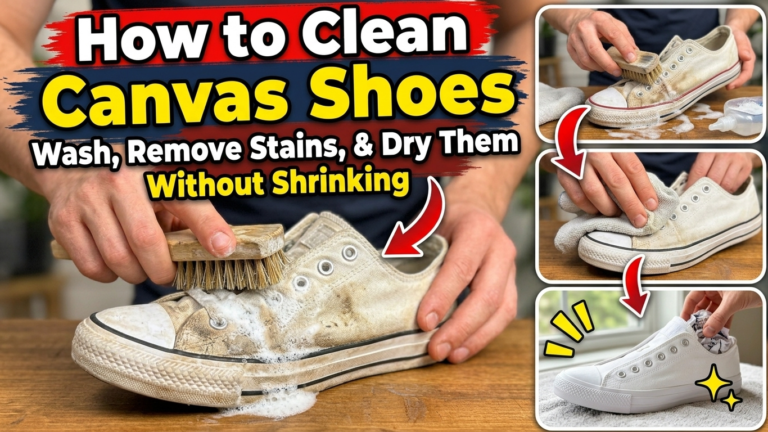
Read also: How to Clean Canvas Shoes: Wash, Remove Stains, and Dry Them Without Shrinking
How to Clean Running Shoe Mesh
Running shoes get dirtier and take more punishment than lifestyle sneakers, and their performance parts need protecting.
- Treat the midsole foam carefully. Do not soak running shoes. Water trapped in the foam and glue can shorten the shoe’s life.
- After trail runs, clean sooner. Built-up grit and mud can reduce grip and wear on the sole. A quick brush after each muddy run is better than a heavy clean every few months.
- Everyday wear needs less frequent cleaning. For casual use, cleaning when marks appear, roughly every few weeks, is usually enough.
- Rain-soaked runs. If your shoes are only wet, not dirty, stuff them with paper, change it as it soaks up water, and let them dry at room temperature.
- Do not use the dryer or a radiator to hurry them. It is the most common way to warp a running shoe.
How to Wash Mesh Sneakers Without Damaging Them
Most of the damage people do to mesh shoes comes from a short list of avoidable mistakes.
| Mistake | What can happen | Better approach |
|---|---|---|
| Machine washing | Tumbling and heat can loosen glue, distort the shape and damage the foam | Hand wash with a brush or cloth |
| Tumble drying | Heat can shrink or warp the upper and weaken the adhesive | Air-dry at room temperature |
| Stiff or hard brushes | Fuzzing, fraying and snagging | Soft brush, or a soft cloth for knit |
| Hot water | Can affect glues and some dyes | Lukewarm water |
| Soaking the whole shoe | Water trapped in foam and inside the shoe, longer drying, odor | Use a damp brush and cloth |
| Strong bleach or harsh chemicals | Discolored fabric, weakened adhesive | Mild detergent or a sneaker cleaner |
| Leaving soap in | Stiff patches, dull spots, new dirt sticking | Wipe thoroughly with a clean damp cloth |
| Drying in direct sun or near a heater | Warping, fading | Shaded, room-temperature drying |
What About the Washing Machine?
Nike specifically advises against machine washing mesh and Flyknit shoes and recommends hand washing, and running-shoe specialists generally advise spot cleaning. The risks are not worth it for most shoes. If a manufacturer’s care label for a particular pair says machine washing is acceptable, follow that exactly. Otherwise, only the laces are worth putting in a machine: place them in a mesh bag on a gentle cycle and air-dry them.
Troubleshooting
- A stain is still visible after washing. Let the shoe dry fully before judging. Wet fabric often looks darker. If the mark remains, repeat the gentle wash once or twice rather than scrubbing harder.
- The mesh looks fuzzy afterward. The brush was probably too stiff or the pressure too heavy. The fibers cannot be restored, so use a softer tool or a cloth next time.
- Yellowing around the midsole or toe cap. This is often a reaction in the sole material or glue over time and may not be fixable with at-home cleaning. A professional restorer is a more suitable option than stronger chemicals.
- The shoe smells damp after drying. It may not be fully dry inside. Remove the insole, stuff with fresh paper and give it more time away from heat.
- Dye has transferred. Color bleeding from dark shoes or socks into white mesh is difficult to reverse at home. Avoid wearing white mesh with damp, dark-dyed fabrics.
How to Keep Mesh Shoes Clean Longer
- Brush off dust and dirt after muddy or dusty wear before it dries in.
- Rotate pairs so shoes get time to dry out between wears.
- Store shoes somewhere dry and ventilated rather than in a sealed bag or a hot car.
- Consider a protective spray made for fabric or mesh sneakers, and follow the product’s instructions. It can make surface dirt easier to remove, but it will not make mesh waterproof.
- Clean regularly but gently. Frequent light cleans are less damaging than one aggressive rescue.
Frequently Asked Questions
Can you put mesh shoes in the washing machine?
It is not recommended. Nike advises hand washing mesh and knit shoes, and tumbling and heat can damage the upper, glue and foam. Hand washing with a soft brush and mild detergent is the safer method.
How often should I clean mesh running shoes?
It depends on use. Trail shoes benefit from a quick clean after muddy runs, while everyday sneakers usually need cleaning only when they look dirty, roughly every few weeks for most people.
What is the best way to clean white mesh shoes?
Dry-brush first, then use mild soap and lukewarm water, or a paste of equal parts baking soda and water for stubborn marks. Wipe away all residue and let the shoes air-dry fully. Avoid bleach unless the manufacturer says it is safe.
How long do mesh shoes take to dry?
Often several hours, and running shoes can take up to around eight. Stuffing them with white paper and replacing it as it dampens speeds things up without heat.
Can I use a hairdryer or radiator to speed up drying?
No. Direct heat can warp the shoe and weaken adhesives. Room-temperature air is safest.
Should I use a brush or a cloth on knit shoes?
A soft cloth is usually the better choice for knit uppers such as Flyknit, as brushing can be too rough. It may take a little more effort, but it is gentler on the fibers.
Final Recommendation
The safest routine for almost every mesh shoe is the plain one: dry-brush, hand wash gently with a soft brush and mild soap, wipe away residue, blot, and air-dry at room temperature with the shoes loosely stuffed.
Use a baking soda paste for white mesh, a soft cloth for knit, and stay away from the washing machine, dryer, stiff brushes and bleach.
If a stain or yellowing survives a couple of gentle attempts, stop and consider a professional rather than escalating to harsher products.
Read also:
2 Comments