How to Clean Satin Shoes: Remove Dirt, Water Stains and Marks Safely
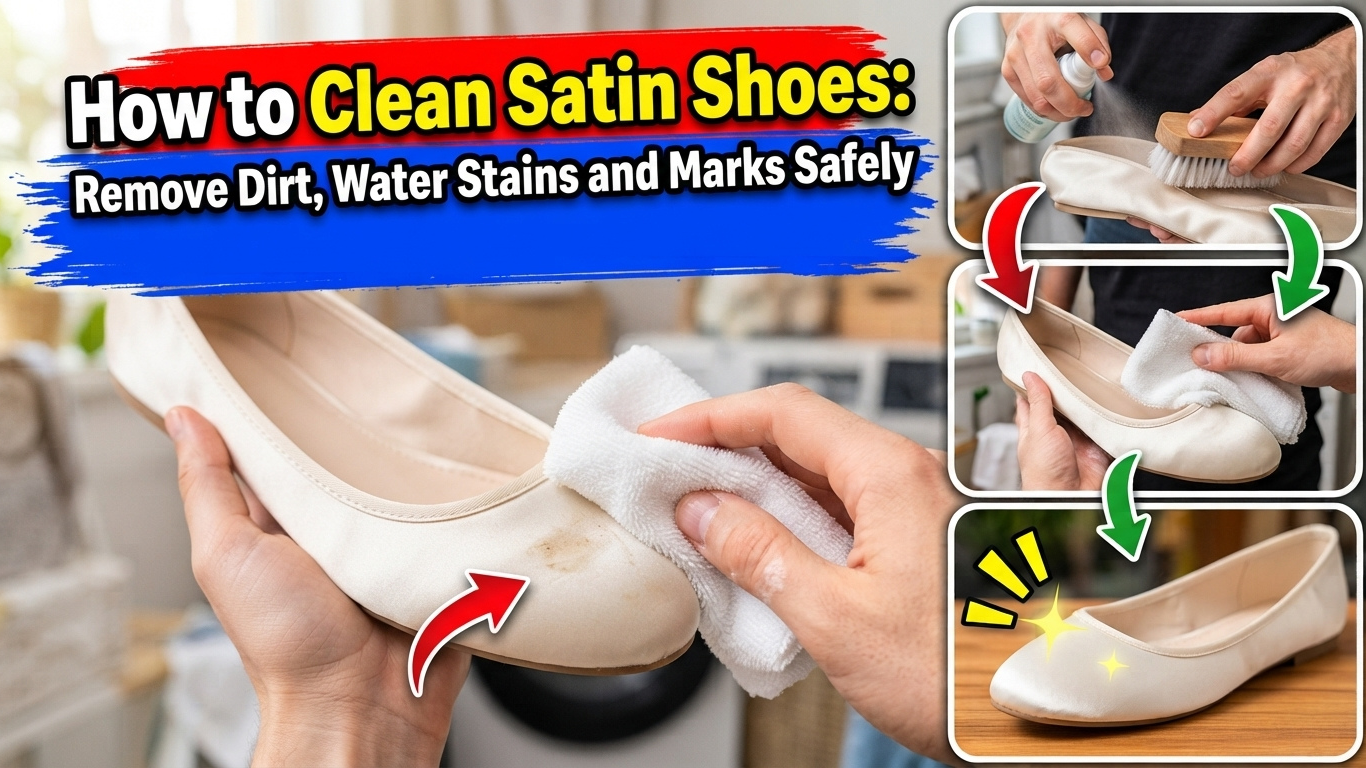
To clean satin shoes, brush off loose dust with a soft brush, then blot marks with a clean white cloth that is only barely damp with water and a tiny drop of mild detergent.
Dab, don’t rub, rinse the cloth and blot again to lift the soap, and let the shoes dry naturally at room temperature with tissue inside.
Satin is delicate: it snags, it water-marks, and its dye can bleed, so the aim is to use as little liquid as possible and work slowly.
This guide covers how to clean satin heels and flats at home, how to remove dirt and water stains from satin shoes, when to stop and see a professional, and how to protect satin shoes so they stay looking good.
Why Satin Is Tricky to Clean
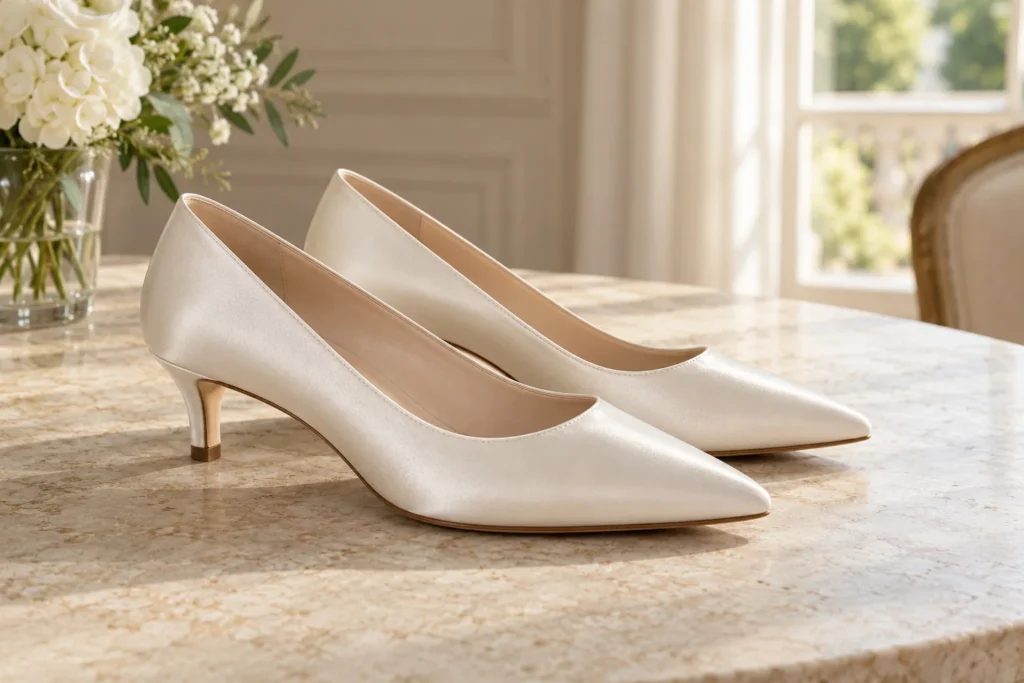
Satin is a weave, not a fibre. It is made by floating threads across the surface, which creates the smooth, glossy face. It can be made from silk, polyester, nylon, acetate or blends, and the material matters:
- Silk satin is the most delicate. It water-marks easily, and the dye can run or fade.
- Polyester satin is more tolerant of moisture and usually easier to clean.
- Dyed satin (for example, shoes dyed to match an outfit) is especially prone to bleeding.
The shine itself is also a concern. Because the surface reflects light, any rubbing, ring or residue shows. Satin shoes also tend to have glued construction, embellishments and sometimes leather or insole linings, which dislike heavy wetting.
Check the care label or the maker’s website first. If the shoes are expensive, bridal, dyed or heavily embellished, professional cleaning is the safest option.
What You Need
| Item | Purpose | Notes |
|---|---|---|
| Soft brush (a baby toothbrush or soft clothes brush) | Removes dust without snagging | Use very light strokes |
| Clean white cloths or white microfibre | Blotting and applying cleaner | Avoid coloured cloths, which can transfer dye |
| Mild liquid detergent | Lifts dirt | A tiny amount; avoid anything with bleach or strong additives |
| Cornstarch or talcum powder | Absorbs fresh oil | Brush off gently afterwards |
| Cotton swabs | Treating small marks | Good for tight spots |
| Plain white tissue or paper | Holds shape while drying | Avoid printed paper |
| Fabric protector spray (optional) | Repels water and stains | Check it is suitable for satin, and test first |
Before You Start
- Test on a hidden area, such as the inside edge near the heel or under a strap. Dab a small amount of your cleaning solution, let it dry fully, and check for colour change, rings or stiffness.
- Work from the outside of the mark inward so you don’t spread it.
- Keep moisture away from glue, embellishments and the sole. Beads, crystals and adhesive trims can loosen when wet.
- Stuff the shoes with plain tissue so they hold their shape.
How to Clean Satin Shoes at Home, Step by Step
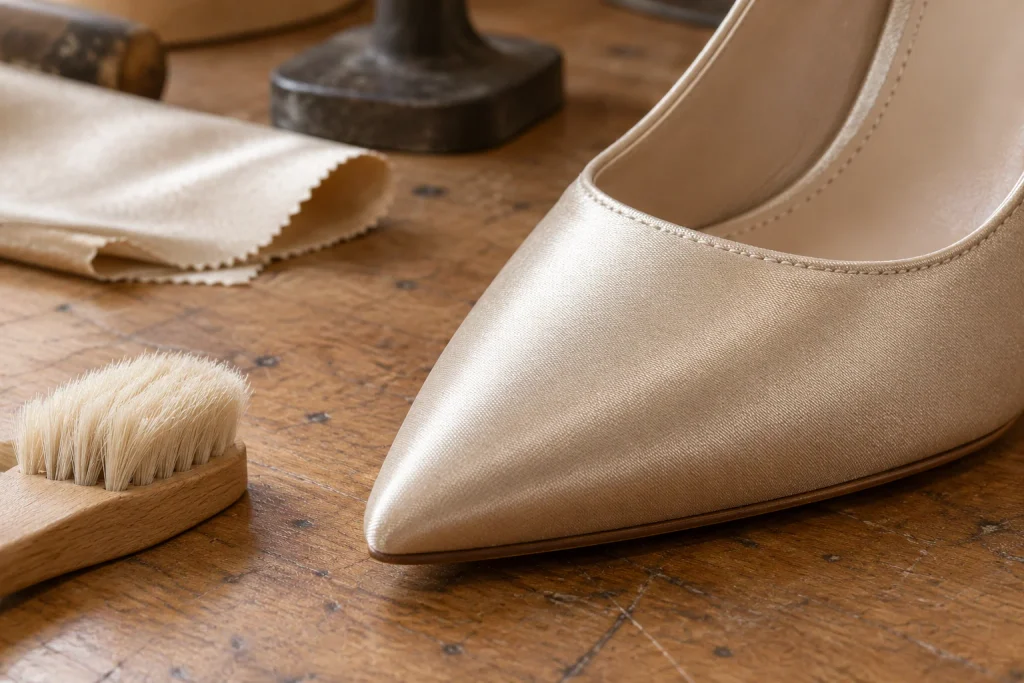
- Brush off loose dust. Use a soft brush with gentle strokes, following the direction of the weave.
- Mix a mild solution. Add one small drop of mild detergent to a little lukewarm water.
- Dampen a white cloth. Dip a corner into the solution and wring it out until it is barely damp, not wet.
- Blot the mark. Press the cloth on the stain, lifting dirt into the cloth. Don’t rub, because friction can dull the sheen or fray the threads. Use a cotton swab for small spots.
- Rinse by blotting. Using a second cloth dampened with plain water, blot the area to lift any soap. Soap left behind can leave a ring.
- Press dry. Blot with a dry, clean cloth to remove surface moisture.
- Air-dry. Leave the shoes at room temperature, away from heat and direct sun, with tissue inside, until completely dry.
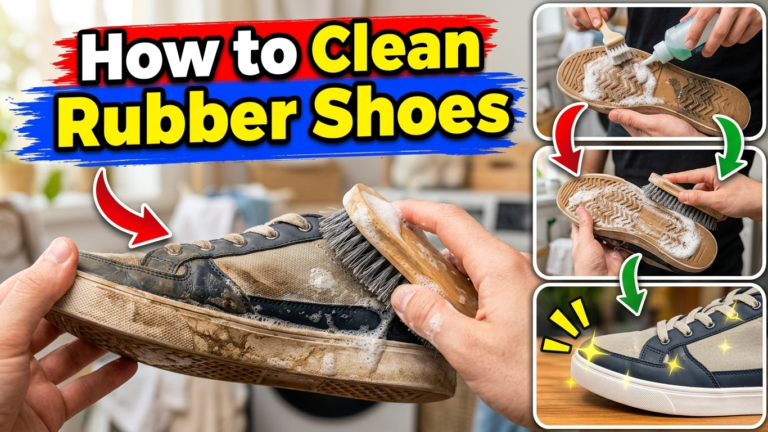
Read also: How to Clean Rubber Shoes: Boots, Clogs, Sandals and Soles
How to Remove Dirt From Satin Shoes
- Dust and light dirt: use a soft brush, and a barely damp cloth if needed.
- Dried mud: let it dry fully, then gently flick or brush it off. Wiping wet mud pushes the dirt into the weave.
- Scuffs on heels and edges: a barely damp white cloth often works. Satin on the heel can be rubbed away, so go lightly.
- Rubbed or dull patches: these are usually wear rather than dirt. Cleaning won’t restore them, and heavy rubbing can make them worse.
How to Remove Water Stains From Satin Shoes
Water stains look like rings or tide marks, and they appear because the fabric dries unevenly, leaving a darker or paler edge. The marks are often the cleaning’s fault rather than the original spill’s.
- Blot fresh water immediately with a dry, clean cloth. Don’t rub.
- For an existing mark, use a barely damp cloth to dampen the whole panel evenly, working from seam to seam. Treating the full section prevents a new edge from forming.
- Blot off excess moisture with a dry cloth.
- Dry naturally with tissue inside, and keep away from heat. Don’t use a hairdryer, since heat can warp the fabric and set marks.
If the ring remains, repeat the process once rather than adding more water. For silk satin and dyed satin, stubborn water marks often need professional help.
Other Stains on Satin Shoes
| Stain | What to try | Cautions |
|---|---|---|
| Oil or grease | Blot gently, cover with cornstarch or talcum powder for a few hours, then brush off softly | Don’t rub it in; old stains may need a professional |
| Makeup or foundation | Dab lightly with a cloth dampened with detergent solution | Test first, and avoid spreading the colour |
| Food and drink | Blot immediately, then dab with detergent solution and blot with water | Sugary spills dry sticky, so treat them quickly |
| Dye transfer or colour bleed | Take to a professional | Home attempts often spread it |
| Ink | Test a cotton swab with a tiny amount of rubbing alcohol on a hidden spot, then dab very carefully | Can lift dye and leave a pale patch |
| Mud | Let dry, brush off, then spot-clean | Don’t wipe wet mud |
| Perspiration marks | Dab with a cloth dampened with mild detergent solution, then blot with water | May not lift old marks |
Avoid bleach, harsh solvents, baby wipes and household sprays. Wipes and some cleaners contain oils or dyes that can leave marks on satin.
When to See a Professional
Consider a shoe repair specialist or professional cleaner for bridal or occasion shoes, dyed satin, shoes with delicate beads or crystals, large or old stains, bleeding dye, and anything you can’t afford to risk. A specialist can also handle repairs to heels, soles and straps.
How to Protect Satin Shoes
Prevention is easier than cleaning, particularly for shoes you only wear on special occasions.
- Use a fabric protector suitable for satin. Apply it to clean, dry shoes in light coats from the distance stated on the product, and test on a hidden spot first, since some sprays can darken or stiffen satin. It can help repel water and stains but won’t make the shoes waterproof.
- Be careful with the weather. Avoid wearing satin shoes in rain, on wet grass or on muddy ground.
- Keep them away from perfume, hairspray and makeup, which can stain or mark the fabric.
- Wipe after wearing. A soft brush or dry cloth removes dust before it settles.
- Store properly. Keep them in a cool, dry place in a breathable shoe bag or box, with tissue inside to hold the shape. Avoid sealed plastic and direct sunlight, which can cause fading and yellowing over time.
- Keep them from rubbing. Store pairs so the fabric doesn’t rub against zips, buckles or rough surfaces.
Common Mistakes to Avoid
| Mistake | What can happen |
|---|---|
| Rubbing or scrubbing | Dull patches, snagged threads |
| Using too much water | Water rings and loosened glue |
| Using heat to dry | Warping and set marks |
| Using strong cleaners or bleach | Colour loss and fabric damage |
| Using coloured cloths | Dye transfer |
| Skipping the hidden-spot test | Colour bleed or marks |
| Cleaning only the stain | Visible ring around the clean area |
Frequently Asked Questions
Can you wash satin shoes with water?
Only in a very limited way. A barely damp white cloth with a tiny amount of mild detergent is usually fine for spot-cleaning polyester satin, but submerging or machine washing satin shoes is risky. Silk or dyed satin may mark even with a damp cloth, so test first.
How do I clean white satin heels?
Brush off dust, blot marks with a barely damp white cloth and a tiny amount of mild detergent, rinse by blotting with plain water, and dry naturally. Avoid bleach, which can yellow white satin. Bridal or very delicate pairs are best left to a professional.
How do I get water marks out of satin shoes?
Dampen the whole panel evenly with a barely damp cloth, from seam to seam, blot, and let it dry at room temperature without heat. If the mark remains, a professional cleaner may be a better option than repeated attempts.
Can I use a hairdryer on satin shoes?
It’s best not to. Heat can warp the fabric, soften glue and set marks. Allow them to dry at room temperature instead.
Is it safe to use a waterproofing spray on satin?
Often yes, if the product is suitable for delicate fabrics and the shoes are clean and dry. Test on a hidden spot first, since some sprays can change the colour or sheen.
How can I stop satin shoes from getting dirty?
Avoid wet or muddy surfaces, apply a suitable protector, wipe after each wear, and store them with tissue in a breathable bag or box.
Conclusion
Satin shoes reward a light touch. Brush off dust, blot marks with a barely damp white cloth and a tiny drop of mild detergent, rinse by blotting, and dry slowly at room temperature.
Treat the whole panel when removing water stains, test products on a hidden spot, and avoid rubbing, heat and harsh chemicals.
A suitable protector spray and careful storage will help keep them looking good. For bridal, dyed or heavily embellished pairs, or any stain that doesn’t lift after a gentle attempt, a professional cleaner is the safest choice.
Read also: