
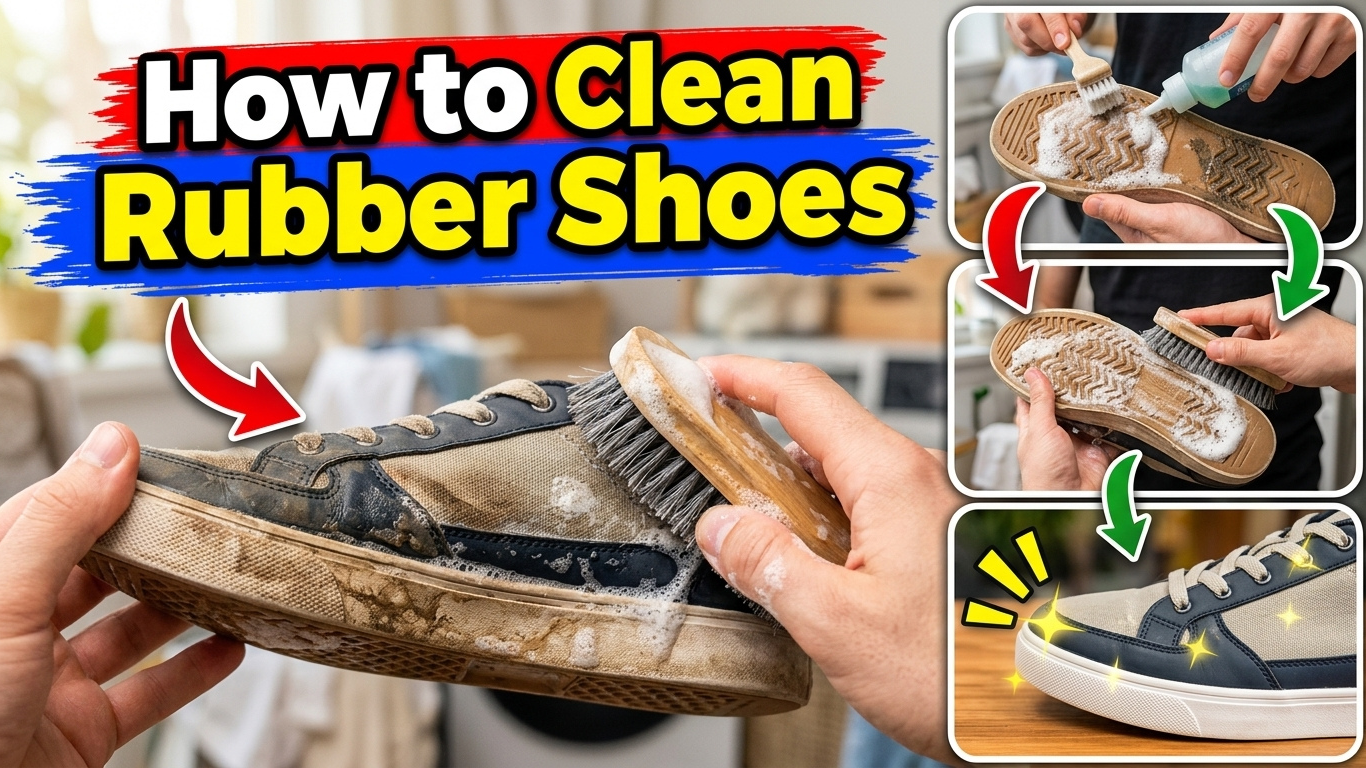
How to Clean Rubber Shoes: Boots, Clogs, Sandals and Soles
To clean rubber shoes, rinse or brush off loose dirt, scrub with a soft brush or cloth and warm (not hot) water mixed with a little mild dish soap, rinse off all the soap, and let the shoes air-dry away from direct heat and sunlight.
Rubber is tough and forgiving, which makes it one of the easiest footwear materials to wash. The things that damage it are heat, harsh solvents and abrasive scrubbing, not dirt.
This guide explains how to wash rubber shoes, how to remove dirt from rubber shoes (including mud, salt and scuffs), how to clean rubber clogs, and how to remove stains from rubber footwear without dulling, drying out or discoloring it.
Know What Kind of “Rubber” You Have
“Rubber shoes” covers several different materials, and the right method depends on which you own.
| Type | Examples | Care notes |
|---|---|---|
| Natural or synthetic rubber | Rain boots, wellies, galoshes, winter boots | Soap and water works well. Natural rubber can develop a white powdery film called bloom. Keep away from heat and sunlight. |
| PVC or “jelly” plastics | Jelly sandals, flip-flops, some garden shoes | Gentle soap and water. Avoid harsh solvents that can cloud or stick to the surface. |
| Molded foam clogs | Crocs and similar clogs, often made of foam resin rather than true rubber | Easy to clean. Avoid heat, which can shrink or warp them. Fur-lined versions need extra care. |
| Rubber soles on other shoes | Sneaker midsoles and outsoles, boots | Clean the sole separately from the upper so you do not damage canvas, leather or knit. |
Check the care label or manufacturer’s website where possible. Brand guidance takes priority over general advice, especially for premium rain boots and lined clogs.
What You Need
| Item | What it is for | Notes |
|---|---|---|
| Mild dish soap | General cleaning | The safest everyday cleaner. |
| Soft brush or old toothbrush | Treads, seams, textured surfaces | Soft bristles only. |
| Microfiber or soft cloth | Wiping, rinsing, drying | Avoid abrasive cloths. |
| Warm water | Loosening dirt | Warm, not hot. |
| Baking soda | Gentle scrubbing paste for stubborn dirt, odor control | A mild abrasive. |
| White vinegar | Diluted solution for salt marks and some odors | Dilute it. |
| White pencil eraser or household cleaning eraser | Scuff marks | Use gently. |
| Disinfecting wipes (optional) | Quick wipe-down and sanitizing | Check the label. Do not use on leather. |
How to Wash Rubber Shoes: Step by Step
- Shake and brush off loose dirt. Knock the soles together and brush dried mud out of the treads. Dry mud flakes off more easily than wet mud.
- Rinse quickly. Use cool or lukewarm water to remove surface dirt.
- Mix a mild solution. Add a small amount of dish soap to warm water.
- Scrub gently. Use a soft cloth or brush on the outside, starting at the top and working down toward the sole. Use the toothbrush on grooves, seams, straps and any textured areas.
- Clean the inside. Wipe the interior with the soapy cloth. This is where sweat and odor build up. For removable liners or insoles, take them out and wash them separately by hand.
- Rinse well. Soap left on rubber can leave a film and attract dirt. Wipe with a clean, damp cloth or rinse under running water.
- Dry with a cloth. Remove excess water so it does not leave spots.
- Air-dry fully. Leave the shoes at room temperature, away from radiators, heaters, hairdryers and direct sun. Stand boots upright so air can circulate inside.
Watch It Done
For a demonstration on rubber-style clogs, this video from Crocs covers the basics of cleaning them:
How to Remove Dirt From Rubber Shoes
The best approach depends on the type of dirt.
| Dirt | What to do | What to avoid |
|---|---|---|
| Dry mud | Let it dry, flake off, brush the treads, then wash as above | Smearing wet mud around the upper |
| Wet mud | Rinse with water, then scrub with soapy water | Scrubbing hard before rinsing |
| Dusty or light grime | Wipe with a damp, soapy cloth | Abrasive pads |
| Salt marks (winter boots) | Wipe with a diluted solution of equal parts white vinegar and water, then rinse with clean water and dry | Leaving salt to build up |
| Stubborn ground-in dirt | Make a paste of baking soda and a little water and scrub lightly with a soft brush | Harsh scrubbing that scratches the surface |
| Dirt in treads and grooves | Use a toothbrush or a plastic scraper | Metal tools that can cut the rubber |
How to Remove Stains From Rubber Footwear
Rubber’s smooth surface resists staining better than fabric, but a few marks do stick around.
Scuff Marks
Scuffs are often rubber or dirt transferred onto the surface rather than damage to it. Try a clean white pencil eraser or a household cleaning eraser. Rub gently and wipe away the debris with a clean cloth. Test on a hidden area first, since some erasers can dull glossy finishes or remove printed designs and labels.
Oil, Grease and Ink
Blot oils with a paper towel first, then wash with dish soap and warm water. Dish soap is designed to break down grease, so it is usually the right first step. For ink and dye stains that resist soap, test a small amount of baking soda paste first. Solvents are riskier and can damage some rubbers and plastics, so use them only as a last resort and on a hidden spot.
Read also: How to Clean Velvet Shoes: Brushing, Stains and Crushed Pile
White Rubber Soles
White soles and toe caps discolor from dirt, scuffs and age. Work in this order:
- Wash with dish soap and a soft brush.
- Use a baking soda paste on stubborn marks.
- Try a damp household cleaning eraser on scuffs.
Some guides recommend acetone for very stubborn marks on rubber soles. It is a strong solvent that can damage glues, paint, foam and adjacent materials, so I would keep it as a final option, test it first, apply it only with a cotton swab and keep it away from the upper.
The White Powdery Film on Rubber Boots
If your rubber boots look dusty or chalky, it is likely bloom. Quality natural rubber can allow particles to rise to the surface. It is harmless and cosmetic, and it can usually be wiped away with a damp cloth. It tends to return over time.
Yellowing or Stiff, Cracked Rubber
Yellowing, stiffness or cracks usually mean the rubber is aging, often from heat, sun exposure or time. Cleaning will not reverse it. Prevention is the best fix, as covered below.
How to Clean Rubber Clogs
Foam clogs such as Crocs are among the easiest shoes to clean, but they have a few quirks.
- Brush off loose debris.
- Hand wash with mild soap and warm water, using a soft brush or cloth. Rinse thoroughly.
- For marks and scuffs, a household cleaning eraser or a microfiber cloth can lift them from classic foam pairs. Test on a small area first, especially if the clog is printed or has decorative charms.
- Remove charms and straps where possible so you can clean the holes and edges properly.
- Let them air-dry in a cool, shaded spot. Heat can shrink or warp the foam, so keep them away from hot cars, dryers and radiators.
Can You Machine-Wash Rubber Clogs?
Classic foam Crocs are often described as machine-washable on a gentle cycle with mild detergent, but I would check the manufacturer’s instructions for your exact pair. Hand washing is always the lower-risk option. Fur-lined or fuzzy clogs should be hand-washed, because the lining is not removable and machine agitation can damage it.
Disinfecting
Shared or heavily worn clogs, boots and sandals can be wiped with disinfecting wipes after cleaning, following the product label and dwell time. Do not use them on leather or leather trim.
Keeping Rubber Shoes in Good Condition
- Rinse and wipe after muddy or salty use. Do not leave dirt or salt on the surface for days.
- Dry away from heat. Heat ages rubber faster than almost anything else.
- Store out of direct sunlight. UV light can fade, stiffen and crack rubber.
- Keep boots upright. Do not fold them. Boot shapers or rolled paper help them hold their form.
- Let the insides dry fully between wears to reduce odor. Baking soda sprinkled inside overnight, then shaken out, helps.
- Use gentle products. Mild dish soap is enough for most jobs.
Common Mistakes
| Mistake | What can happen | Better approach |
|---|---|---|
| Drying near a heater or in direct sun | Warping, shrinking, cracking, fading | Dry at room temperature in the shade |
| Using hot water | Can distort foam clogs and stress glues | Warm water |
| Harsh solvents on the whole shoe | Clouding, softening, damaged adhesives and prints | Soap, baking soda, eraser first |
| Stiff or metal brushes | Scratches and dull patches | Soft brush |
| Leaving soap residue | Film that attracts dirt | Rinse well |
| Using wipes on leather trim | Damage to the leather | Check the label first |
| Not cleaning off salt | White salt marks and drying of the rubber | Wipe off with diluted vinegar and water |
Frequently Asked Questions
What is the best cleaner for rubber shoes?
Mild dish soap and warm water is the best everyday cleaner. It handles most dirt, and it is gentle on rubber, plastic and foam. Baking soda paste adds a little more cleaning power for stubborn spots.
Can I clean rubber shoes with vinegar?
Yes, in a diluted solution. Equal parts white vinegar and water is commonly used for salt marks and some odors. Rinse afterward and dry the shoes fully.
How do I get scuff marks off rubber shoes?
Try a clean white pencil eraser or a household cleaning eraser, and rub gently. Wipe away the debris with a cloth. Test first on a hidden spot.
Why do my rubber boots have a white powdery coating?
This is likely bloom, a natural effect where particles rise to the surface of rubber. It is harmless and can usually be wiped off with a damp cloth.
Can rubber clogs go in the dishwasher or dryer?
No. Heat can shrink or warp them. Wash them by hand, or follow the manufacturer’s machine-wash instructions if you choose that route, and always air-dry.
How do I get the smell out of rubber shoes?
Wash the inside with soapy water, rinse, let them dry fully, and leave baking soda inside overnight before shaking it out. A diluted vinegar solution can also help with some odors.
Final Recommendation
For nearly all rubber shoes, the routine is simple: brush off dry dirt, wash with mild dish soap and warm water, rinse well and dry at room temperature in the shade.
Use baking soda paste for stubborn grime, a diluted vinegar solution for salt, and a pencil or household cleaning eraser for scuffs.
Reserve strong solvents for rare cases, test them on a hidden spot, and keep rubber away from heat and sunlight to stop it stiffening, fading and cracking.
Read also:
One Comment