
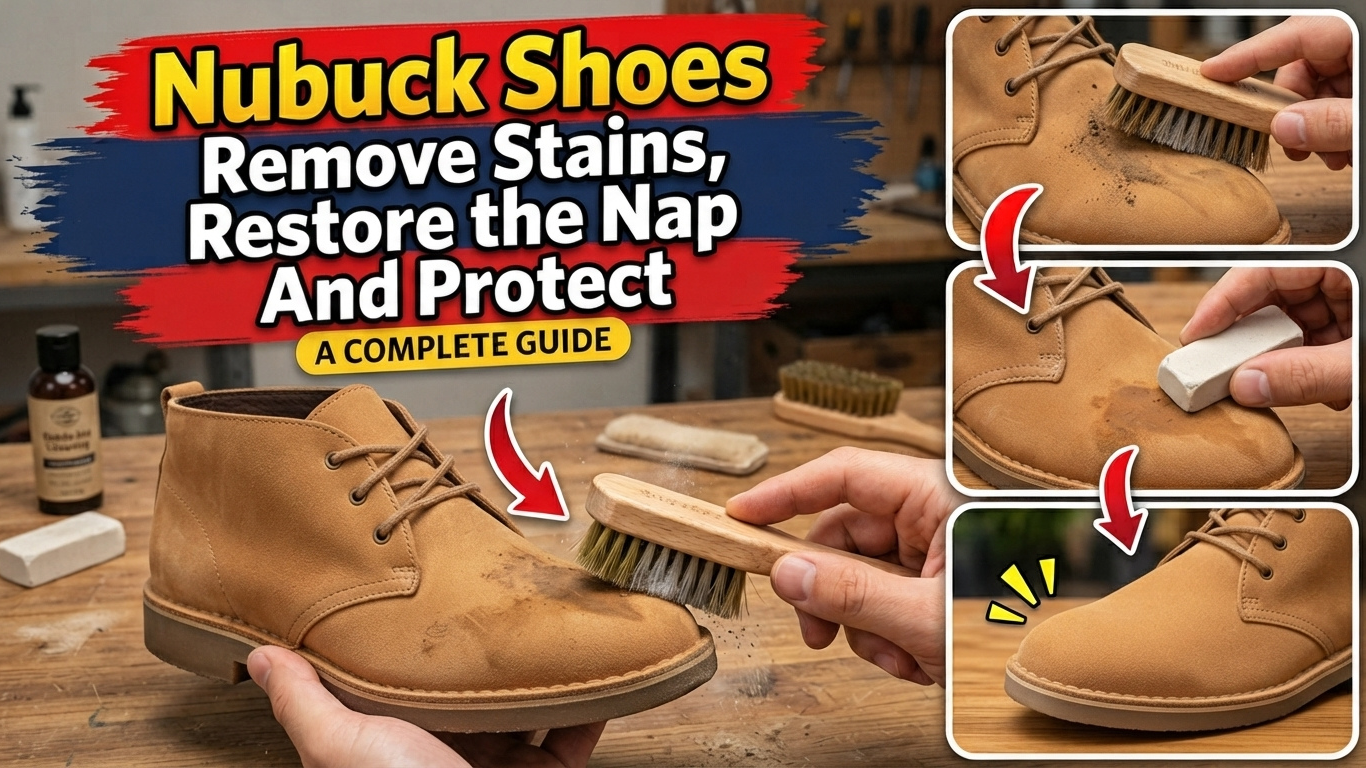
How to Clean Nubuck Shoes: Remove Stains, Restore the Nap and Protect the Finish
To clean nubuck shoes, let them dry fully, brush off loose dirt with a nubuck brush, rub scuffs with a nubuck block or eraser, and treat stains with a dedicated nubuck cleaner or a lightly dampened white cloth.
Dry them slowly at room temperature, then brush the nap back up and apply a nubuck-safe protector.
Nubuck has a fine, velvety surface that looks a lot like suede, but it is made differently and tolerates a bit more care, as long as you avoid soaking, heat, and polishes made for smooth leather.
This guide explains how to clean nubuck leather at home, how to remove stains from nubuck shoes, what a nubuck shoe cleaning kit should contain, and how to restore nubuck shoes that look dull, faded or worn.
What Is Nubuck, and Why Does It Need Special Care?
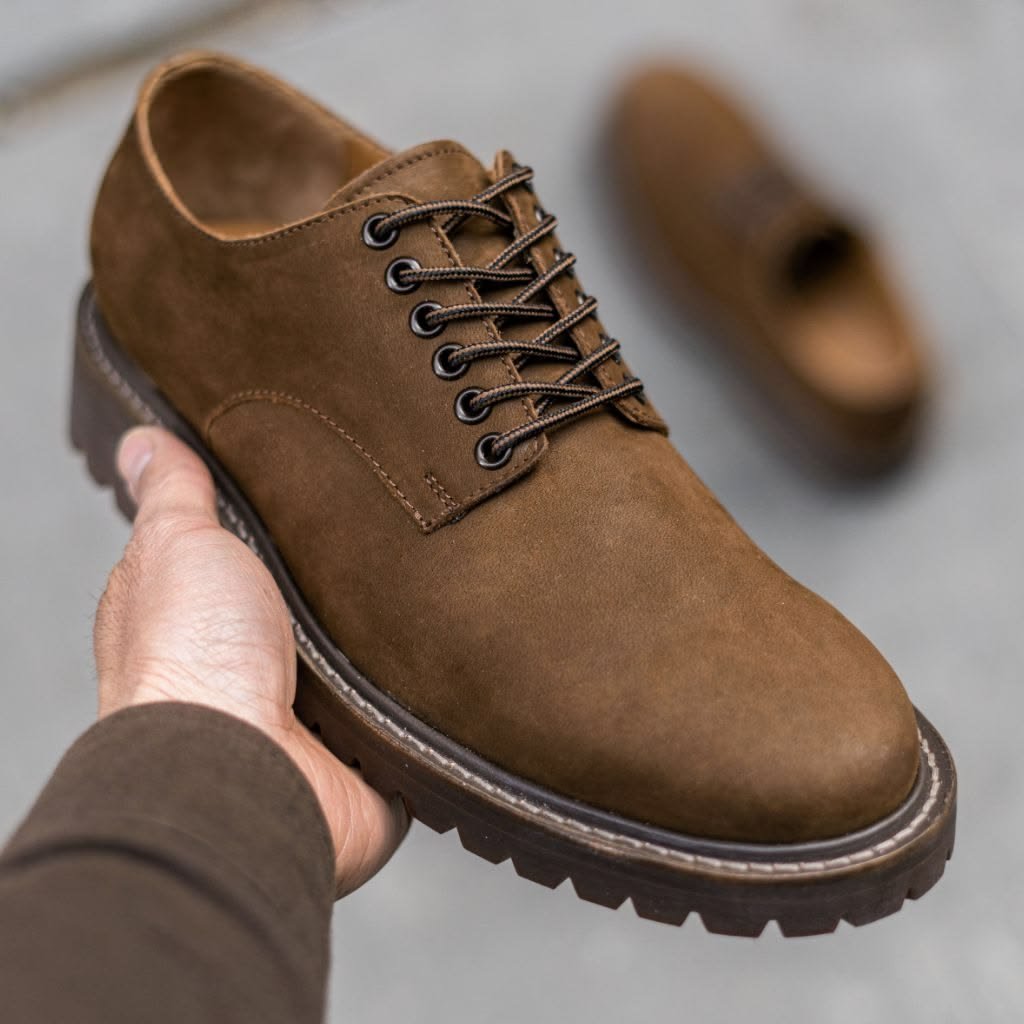
Nubuck is leather made from the outer surface of the hide (the grain side), which is lightly sanded or buffed to create a short, fine nap.
Suede is made from the inner side of the hide and has a longer, softer, shaggier nap. Because nubuck keeps part of the tighter outer grain, it is generally stronger and more hard-wearing than suede.
That surface still has downsides:
- The open, buffed fibres absorb water, oil and dirt easily.
- Rubbing or scrubbing flattens the nap and leaves shiny patches.
- Marks often show as darker or lighter patches, because the nap changes colour as it lies flat or stands up.
- Many nubuck shoes are dyed, so harsh products can strip colour.
Always check the manufacturer’s care label. Some brands treat nubuck with a water-repellent finish, and their instructions come before any general advice here. Synthetic “nubuck-look” materials are a different story and are usually easier to clean with mild soap and water.
What a Nubuck Shoe Cleaning Kit Should Contain
You can buy a ready-made kit or put one together. Either way, look for products labelled for nubuck (and often suede). Products made for smooth leather, such as wax polish and cream, can darken and clog the nap.
| Item | Purpose | Notes |
|---|---|---|
| Nubuck brush (soft bristles, sometimes with a rubber side) | Removes dust, lifts the nap | Use gentle strokes; stiff brass bristles can be too harsh for fine nubuck |
| Nubuck block or eraser | Lifts dry marks, scuffs and shiny spots | A block is a rubbery sponge that rubs off dry marks |
| Nubuck cleaner (foam or liquid) | Lifts embedded dirt and stains | Follow the product directions exactly and test first |
| Nubuck protector or waterproofing spray | Repels water and stains | Choose one that states it is suitable for nubuck; apply to clean, dry shoes |
| Nubuck colour restorer or dye (optional) | Revives faded colour | Match the colour carefully and test first |
| White cloths or sponges | Blotting and applying products | White avoids dye transfer |
| Shoe trees or plain paper | Holds shape while drying | Avoid printed newspaper, which can transfer ink |
A kit isn’t essential for light cleaning. A soft brush, a white cloth and a nubuck block handle most everyday dirt. The cleaner and protector are what you add for stains and long-term care.
Before You Start
- Check the label and the material. Confirm it is real nubuck, not suede or a synthetic.
- Test first. Try any product on a hidden spot, such as under the tongue or inside the heel. Let it dry fully and check for colour change or stiffness.
- Make sure the shoes are dry. Damp nubuck smears when brushed.
- Remove laces and insert shoe trees or plain paper to hold the shape.
How to Clean Nubuck Leather at Home: Step by Step
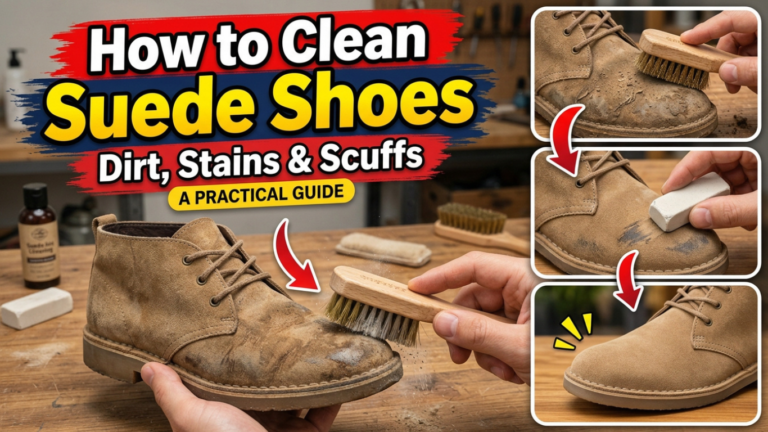
- Brush off dry dirt. With a nubuck brush, work in short, light strokes, ideally in one direction. For dried mud, let it dry completely, then crumble and brush it away.
- Rub out marks with a nubuck block or eraser. Use gentle back-and-forth motions on scuffs and shiny spots, then brush away the crumbs.
- Spot-clean if marks remain. Apply a nubuck cleaner as directed, or dab with a clean white cloth that is barely damp. Blot rather than rub, and work from the outside of a mark toward the centre to avoid spreading it.
- Clean the edges and seams. A soft toothbrush loosens dirt from stitching and where the upper meets the sole.
- Dry naturally. Leave the shoes at room temperature with shoe trees or paper inside, away from radiators and direct sun.
- Brush the nap back up. Once fully dry, brush lightly to even the texture and colour.
- Protect. Apply a nubuck-suitable protector in thin, even coats from the distance stated on the can. Let it dry fully before wearing.
How to Remove Stains From Nubuck Shoes
Act quickly, and blot instead of rubbing, as rubbing pushes the stain deeper and mats the nap.
| Stain | What to try | Cautions |
|---|---|---|
| Dry dirt or mud | Let it dry, brush off, then use a nubuck block | Don’t wipe wet mud |
| Water marks | Dampen the whole panel evenly with a barely damp white cloth, dry naturally, then brush | Uneven dampening leaves a new ring |
| Oil or grease | Blot, cover with cornstarch or talcum powder for several hours, then brush off | Old, set oil may need a professional |
| Salt marks | Dab with a white cloth dampened with diluted white vinegar (about equal parts with water), let dry, brush | Test first, since vinegar can lighten some dyes |
| Food and drink | Blot immediately, let dry, brush, then spot-clean if needed | Don’t let sugary spills dry in place |
| Ink | Test a nubuck cleaner on a hidden area; otherwise consult a specialist | Alcohol and solvents can strip colour |
| Scuffs and scratches | Use the nubuck block, then brush | Brush in a consistent direction to blend |
If a first attempt only partly works, let the shoe dry completely before trying again. Repeating wet treatments on damp nubuck is how patchy stains develop.
How to Restore Nubuck Shoes
Restoration covers worn, flattened, faded or stained pairs. Work through these in order, stopping when the shoes look right.
- Deep brush and block. Brushing in different directions to loosen the nap, then back in one direction, often revives dull areas.
- Raise the nap gently. Holding the shoe briefly in steam from a kettle, at a safe distance, then brushing can help lift flattened fibres. Keep it brief, because too much moisture or heat can stain or warp nubuck.
- Clean thoroughly. Use a nubuck cleaner on the whole shoe, not just the marks, so the colour dries evenly.
- Restore colour if needed. A nubuck colour restorer or dye can refresh faded areas. Choose the closest shade, test it first, apply thinly, and let it dry before adding more.
- Apply a protector so the restored finish lasts.
Restoration has limits. Deep cracking, heavy sole separation, mould, or large patches of lost colour often need a cobbler or specialist cleaner.
Drying Nubuck Safely
- Dry at room temperature, away from heaters, hairdryers and direct sunlight, which can cause stiffening and cracking.
- Keep the shoe’s shape with shoe trees or plain white paper, and swap the paper if it gets damp.
- Allow at least a full day before wearing or applying protector.
- Don’t put nubuck in the washing machine or tumble dryer.
Mistakes to Avoid
| Mistake | What can happen |
|---|---|
| Soaking the shoes | Stiffness, staining and a changed shape |
| Scrubbing with a hard brush | Flattened nap and shiny patches |
| Using smooth-leather polish, wax or cream | Dark, greasy, clogged nap |
| Drying with heat | Shrinkage and cracking |
| Using coloured cloths | Dye transfer |
| Skipping the patch test | Colour loss or blotchiness |
| Using strong household chemicals | Stripped finish and damaged fibres |
Keeping Nubuck Clean for Longer
- Apply a nubuck-safe protector to new shoes before first wear, and reapply as the manufacturer advises.
- Brush after wearing to stop dirt settling into the nap.
- Rotate pairs so each one can dry and recover.
- Store with shoe trees in a cool, dry, ventilated spot, not in sealed plastic.
- Avoid heavy rain, mud and oily surfaces where you can.
Frequently Asked Questions
Can you use water to clean nubuck?
A little, yes, but carefully. A barely damp white cloth is often fine for spot-cleaning, and some nubuck cleaners are applied with water or foam. Soaking is risky, because it can stiffen the leather and leave marks. Always check the care label first.
What is the difference between cleaning nubuck and cleaning suede?
The methods are similar: dry brushing, erasing, then gentle spot treatment. Nubuck’s finer nap is easier to flatten or mark with harsh brushing, so use a softer touch and nubuck-specific products. Nubuck is generally slightly sturdier than suede, but it isn’t waterproof.
Can I use a suede cleaner on nubuck?
Many products are labelled for both, but check the label. Use only those that say they are suitable for nubuck, and test first.
How do I fix shiny or flattened patches on nubuck?
Use a nubuck block or eraser, then brush the area gently. A brief hold over steam from a safe distance followed by brushing can help lift the fibres. Avoid heavy pressure.
Can nubuck be waterproofed?
Yes, with a protector made for nubuck. It helps repel water and stains but won’t make the shoes fully waterproof. Apply it to clean, dry shoes and test first, since some sprays slightly darken the colour.
How often should I clean nubuck shoes?
Brush them after wearing, treat stains as they happen, and do a fuller clean when they look dull or dirty. Reapply protector as the product directions say.
Conclusion
Cleaning nubuck comes down to a gentle, dry-first approach: brush, use a nubuck block, and only then bring in a barely damp cloth or a nubuck cleaner for stains.
Test every product on a hidden area, dry slowly at room temperature, and brush the nap back up afterwards.
For faded or worn pairs, a thorough clean, a careful touch of colour restorer and a good protector can bring them back to a much better state.
If the damage is deep, set-in or on a pair you can’t afford to lose, a specialist cleaner is the safer choice.
Read also:
One Comment